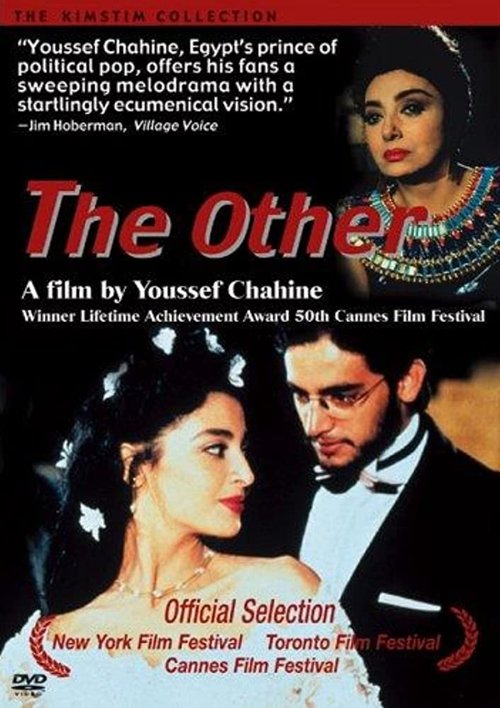
The Other
Plot
Adam is the son of a wealthy Egyptian-American family who is studying at UCLA and returns home for a brief vacation. Upon his arrival he meets beautiful reporter Hanane, with whom he begins an intense love affair, and eventually they marry. Trouble arises when Hanane' s journalistic interests lead her to the corrupt business affairs of Adam's parents, who are interested in building an American tourist compound that would allow Americans further control of Egypt's tourist industry, and make them a whole lot richer.
Get the Weekly Woke Watchlist
New and trending movies scored for woke bias, preachy messaging, and forced political themes — before you waste your evening.
No spam. One useful email per week.
Overall Series Review
Categorical Breakdown
The plot's entire structure is based on a class and cultural identity hierarchy, pitting the "native" Egyptian of modest parents against the wealthy, Western-obsessed Egyptian-American elite. The corrupt wealthy class serves American interests to gain control of Egypt's tourist trade, acting as a clear post-colonial critique of capitalism and imperialism, aligning moral value with socio-economic and cultural identity rather than merit.
Hostility is directed primarily at American economic influence and the Westernized elite in Egypt who embrace it, framing them as fundamentally corrupt and a threat to Egyptian cultural heritage. The protagonist, Adam, turns against the global economy that his parents are enthusiastic members of, highlighting a rejection of the modern Western system and a preference for native values, which aligns with anti-Western civilizational self-hatred of a globally-connected class.
Hanane is an independent, morally-driven journalist who actively pursues a story exposing her in-laws' corruption, remaining firm in her work despite her husband's demand to stop and threatening their marriage, which elevates her "Girl Boss" career pursuit over the marital institution. The antagonist is Adam's Americanized mother, a negative maternal figure with a sexually perverse attachment to her son, contrasting negatively with the strong, independent female lead.
The narrative centers on a traditional male-female pairing and marriage, Hanane and Adam. There is no presence of alternative sexualities, gender ideology, or deconstruction of the nuclear family beyond the pathological and sensational element of the mother's incestuous obsession with her son.
The film includes a critique of *Islamic fanaticism* and its ties to global corruption and speculation, which Adam is studying. The director is historically known for advocating religious tolerance and criticizing extremism. The focus is on the political abuse of religion (fanaticism), not a blanket rejection of faith or moral objectivity.
Get the Weekly Woke Watchlist
New and trending movies scored for woke bias, preachy messaging, and forced political themes — before you waste your evening.
No spam. One useful email per week.