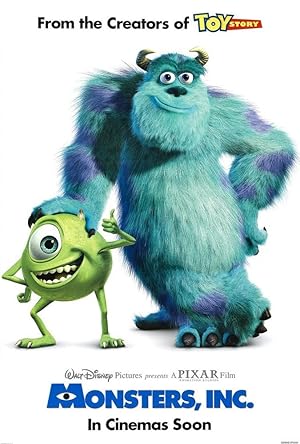
Monsters, Inc.
Plot
A city of monsters with no humans called Monstropolis centers around the city's power company, Monsters, Inc. The lovable, confident, tough, furry blue behemoth-like giant monster named James P. Sullivan (better known as Sulley) and his wisecracking best friend, short, green cyclops monster Mike Wazowski, discover what happens when the real world interacts with theirs in the form of a 2-year-old baby girl dubbed "Boo," who accidentally sneaks into the monster world with Sulley one night. And now it's up to Sulley and Mike to send Boo back in her door before anybody finds out, especially two evil villains such as Sulley's main rival as a scarer, chameleon-like Randall (a monster that Boo is very afraid of), who possesses the ability to change the color of his skin, and Mike and Sulley's boss Mr. Waternoose, the chairman and chief executive officer of Monsters, Inc.
Get the Weekly Woke Watchlist
New and trending movies scored for woke bias, preachy messaging, and forced political themes — before you waste your evening.
No spam. One useful email per week.
Overall Series Review
Categorical Breakdown
Characters are judged by their competence and moral choices, not immutable characteristics; Sulley is the champion who reforms the system, a classic hero journey based on merit and moral awakening. The central conflict is corporate corruption versus personal ethics.
The film critiques a corrupt establishment institution—the Monsters, Inc. corporate monopoly and its unsustainable, fear-based system—rather than the civilization itself. The narrative ends with the reformation and salvation of Monstropolis by adopting a superior, benevolent method (laughter) discovered through contact with the human child, a rejection of the 'ancestral' corrupt business practice.
The core emotional arc centers on the emergence of Sulley as a protective, paternal figure for the young girl, Boo, which champions protective masculinity and the theme of fatherhood. Women, like Mike's girlfriend Celia and the CDA agent Roz, are side characters, but the main thrust is complementarian in its focus on parental instinct and friendship.
The narrative maintains a normative structure with a platonic male partnership and an emergent father-daughter relationship. No sexual ideology, alternative sexualities, or gender theory is centered, deconstructed, or lectured upon for the audience.
The film explicitly champions an objective moral truth—that goodness (laughter) is dramatically superior and more powerful than fear and pain (screaming). This moral victory reforms the entire society, rejecting moral relativism in favor of an objective, higher moral law of kindness.
Get the Weekly Woke Watchlist
New and trending movies scored for woke bias, preachy messaging, and forced political themes — before you waste your evening.
No spam. One useful email per week.