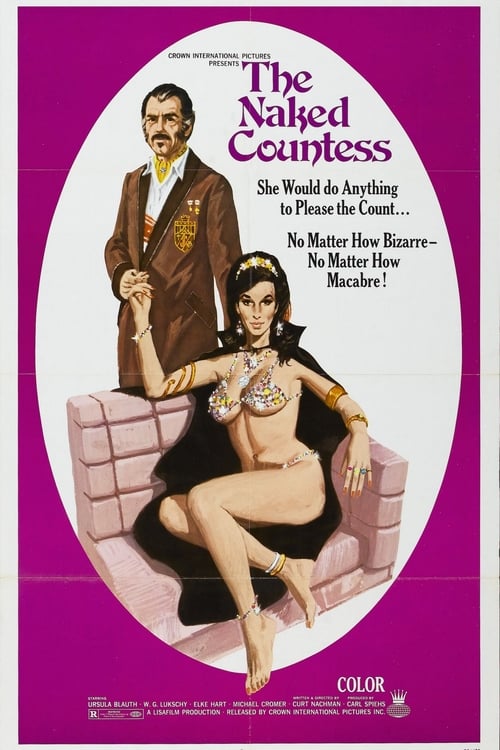
The Naked Countess
Plot
The impotent count Anatol loves to photograph his wife Verena, while she is having fun with other men. Everything changes when Verena falls in love with Toni, a young auto mechanic.
Get the Weekly Woke Watchlist
New and trending movies scored for woke bias, preachy messaging, and forced political themes — before you waste your evening.
No spam. One useful email per week.
Overall Series Review
Categorical Breakdown
The main conflict is based on a class dynamic, pitting the vital, lower-class auto mechanic against the decadent, impotent aristocratic Count. The story does not rely on race or modern intersectional theory; the critique is strictly of the entitled, old European noble class.
The film functions as a deconstruction of traditional European heritage and aristocracy. The home culture, represented by the Count’s estate and his title, is framed as fundamentally corrupt, sterile, and impotent. The Countess achieves liberation by rejecting her aristocratic husband and embracing a man from the lower social strata, depicting the noble class as spiritually and physically depleted.
The female lead's story is centered entirely on her sexual and emotional fulfillment, achieved by abandoning the traditional role of a Countess and rejecting her husband’s impotence. The Count is depicted as a bumbling, emasculated voyeur who fails to be a protective or vital male figure. Personal liberation and subjective fulfillment are prioritized over marital duty or family structure.
The narrative focuses on a heterosexual love triangle and themes of marital infidelity and sexual liberation. The Count’s psychological and sexual dysfunction is a plot point, but the film does not center on alternative sexual identities as a political or ideological framework, nor does it feature contemporary gender theory or a lecture on non-normative sexualities.
The plot operates within a moral vacuum where a noblewoman's liberation is found through the pursuit of purely subjective, physical desire at the expense of a marital vow. The pursuit of pleasure and self-actualization over duty implies a complete lack of belief in Objective Truth or a higher moral law, though there is no explicit vilification of Christianity or religious figures.
Get the Weekly Woke Watchlist
New and trending movies scored for woke bias, preachy messaging, and forced political themes — before you waste your evening.
No spam. One useful email per week.