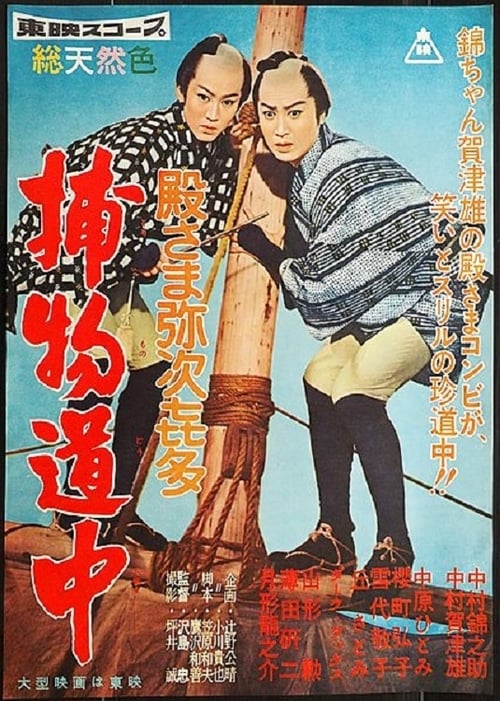
Diary of a Wandering Lord
Plot
Two thrill seeking young lords sneak out of their castles and travel under the disguise of townsmen.
Get the Weekly Woke Watchlist
New and trending movies scored for woke bias, preachy messaging, and forced political themes — before you waste your evening.
No spam. One useful email per week.
Overall Series Review
Categorical Breakdown
The narrative is a pure expression of Universal Meritocracy. The two protagonists deliberately shed their immutable characteristic (their noble birth) to be judged on their character and merit as townsmen. The story is a critique of class hierarchy, not race or gender, and does not feature the vilification of white males as an identity group; it critiques their privilege and isolation, but affirms the characters' potential for heroism.
The film features a gentle, internal critique of the noble class's ignorance and detachment from the common man's life, not an outright hostility toward Western civilization. The journey to the common villages serves to connect the lords with the 'home' culture and its people, resulting in a renewed respect for the nation and the fundamental values of work and community. This affirms Chesterton's Fence rather than tearing it down.
The plot centers entirely on the two male leads. Female characters occupy traditional, secondary roles typical of a 1959 film, likely as moral anchors or romantic interests. There are no elements of the 'Girl Boss' or 'Mary Sue' tropes. The score is only slightly above the lowest due to the simple exclusion of complex or leading female characters, which is a structural feature of the adventure genre at the time, not a thematic attack on femininity or motherhood.
The story is an adventure focusing on two male companions who interact with traditional society. The film operates entirely within a Normative Structure where the traditional male-female pairing and nuclear family are the assumed social order. There is no presence of sexual ideology, alternative sexualities, or deconstruction of the family unit, consistent with a 1959 production.
The narrative's moral backbone is entirely rooted in Objective Truth. The lords' journey is a moral quest for self-improvement and a better understanding of their duty, which draws upon a traditional, transcendent moral law. Faith and the community's traditional religious life are presented as sources of social cohesion and moral strength, with no characters or themes suggesting traditional religion is the root of evil.
Get the Weekly Woke Watchlist
New and trending movies scored for woke bias, preachy messaging, and forced political themes — before you waste your evening.
No spam. One useful email per week.