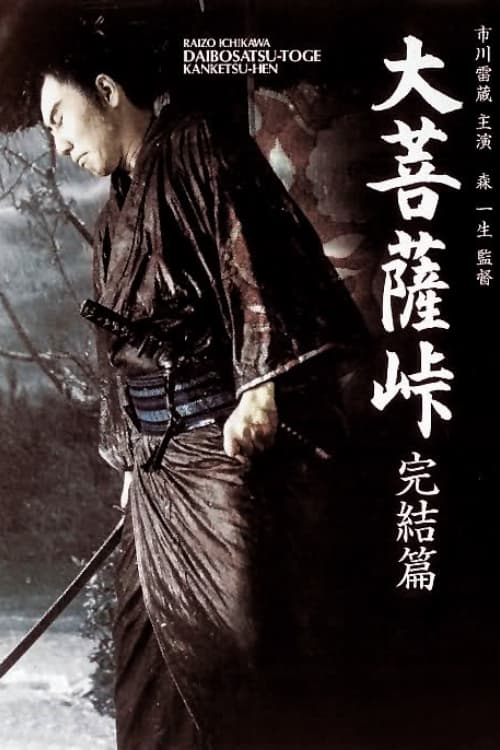
Satan's Sword III: The Final Chapter
Plot
Disguised as a beggar monk, Ryunosuke is harassed along the road by the rowdy members of a country dojo or fencing school malingering outside their fencing hall. The third film in the Satan's Sword trilogy.
Get the Weekly Woke Watchlist
New and trending movies scored for woke bias, preachy messaging, and forced political themes — before you waste your evening.
No spam. One useful email per week.
Overall Series Review
Categorical Breakdown
The story is an authentic period piece focused on Japanese samurai culture and political intrigue. Conflict is based on personal merit, revenge, and fate, not on intersectional identity or systemic oppression based on immutable characteristics. The casting is historically congruent with the setting.
The film is a Japanese production set in feudal Japan, offering an internal cultural critique of its own nation's turmoil (the Tokugawa shogunate's final years). It does not exhibit hostility toward Western civilization or frame external cultures as morally superior to the West.
Female characters, such as the roles played by Tamao Nakamura, are integral to the tragic narrative through their direct connections to the main male anti-hero's moral decay. The story includes the male protagonist's violence against women and the central element of his abandoned son, which is critical to his final madness. This is a traditional tragic dynamic and does not feature 'Girl Boss' tropes or anti-natalist messaging, though the primary male figure is deeply toxic.
The narrative centers on a classic revenge plot, political upheaval, and traditional male-female relationships, often in their most brutal form (betrayal and sexual violence). There is no centering of alternative sexualities, deconstruction of the nuclear family as oppressive, or lecturing on modern gender theory.
The film is fundamentally a demonstration of transcendent morality, where the protagonist's evil actions lead directly to his psychological destruction through the concept of 'karma' or spiritual law. The character's nihilism is framed as his undoing, not a moral victory. It does not critique Christianity, as it is set in non-Christian Japan, and ultimately affirms an objective moral order.
Get the Weekly Woke Watchlist
New and trending movies scored for woke bias, preachy messaging, and forced political themes — before you waste your evening.
No spam. One useful email per week.