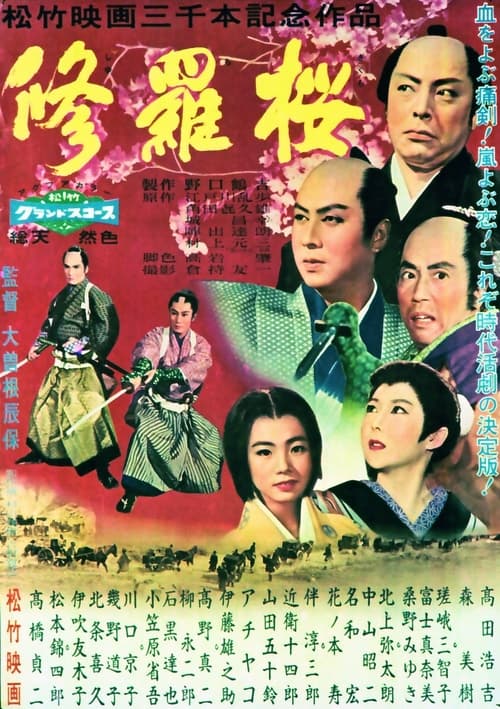
The Hidden Treasure
Plot
Shochiku's commemorative 3000th film production; a suspenseful period drama.
Get the Weekly Woke Watchlist
New and trending movies scored for woke bias, preachy messaging, and forced political themes — before you waste your evening.
No spam. One useful email per week.
Overall Series Review
Categorical Breakdown
The film is a Japanese period drama, meaning the entire cast and setting are authentic to the Japanese historical context. Characters are judged on their actions within the story's historical framework, such as honor, loyalty, and ambition, consistent with universal meritocracy. The concept of 'vilification of whiteness' or 'forced diversity' is entirely absent and irrelevant to the narrative.
The narrative is a Japanese commemorative period piece, which by its nature is a celebration or respectful dramatic portrayal of the nation's own history and ancestry. It frames its own home culture as the setting for the story, viewing core national institutions and ancestral sacrifices with gravity, directly opposing civilizational self-hatred.
As a mainstream period drama from 1959, the film's gender dynamics are structured around the traditional, complementary male and female roles of that era and setting. Female characters operate within established social expectations, and the film contains no 'Girl Boss' tropes, male emasculation, or anti-natalist messaging.
The subject matter is a 1959 Japanese period drama. The narrative is focused on historical events, suspense, and period-appropriate relationships. Centering alternative sexualities, deconstructing the nuclear family, or lecturing on gender theory is absent from the story's structure and cultural context.
The film's setting is a Japanese period piece, where spiritual and religious elements would be treated as part of the cultural landscape. It does not contain any hostility toward religion, specifically Christianity, and does not embrace modern moral relativism as its core theme. Moral law is likely tied to the period's cultural and political values.
Get the Weekly Woke Watchlist
New and trending movies scored for woke bias, preachy messaging, and forced political themes — before you waste your evening.
No spam. One useful email per week.