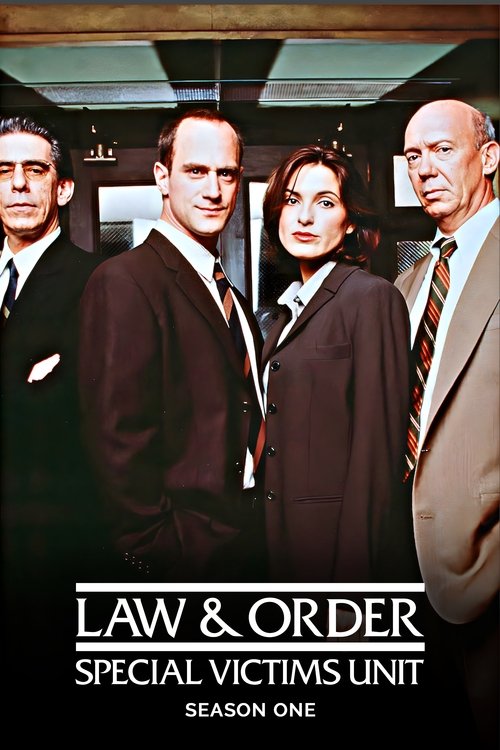
Law & Order: Special Victims Unit
Season 1 Analysis
Season Overview
No specific overview for this season.
Season Review
Categorical Breakdown
The core conflict revolves around the perpetrator's pathology and the victim's need for justice, regardless of their immutable characteristics. The casting includes a Black detective (Monique Jeffries) as a competent member of the squad, but the narrative does not center on race-based systemic oppression or the vilification of whiteness; characters are judged by their actions and professional merit.
The show is a 'Law & Order' procedural, which validates the institutions of American law enforcement and the justice system as necessary shields against the chaos of depravity. Although episodes acknowledge the system's failures and complexity, this is a critique of execution within the system, not a framing of Western culture or American heritage as fundamentally corrupt.
Detective Olivia Benson is established as the central, deeply empathetic, and competent investigator, which aligns with the 'Girl Boss' trope. Her partner, Detective Stabler, is often shown struggling with his home life and responsibilities as a father and husband, while Benson's professional career is her primary source of fulfillment, resulting in a moderate score.
The first season's cases focus on crimes like rape, child sexual abuse, and human trafficking. The narrative maintains a normative structure, with no evidence of promoting alternative sexual or gender ideology as a central theme. Sexuality is largely addressed in the context of criminal pathology or BDSM subculture, without political lecturing on identity theory.
The show is based on the pursuit of objective 'Law and Order,' which presupposes a belief in transcendent moral law (right vs. wrong) that the detectives and the justice system are tasked with upholding. No episodes are summarized as featuring traditional religion, particularly Christianity, as the source of evil or its practitioners as bigots; faith is absent rather than vilified.