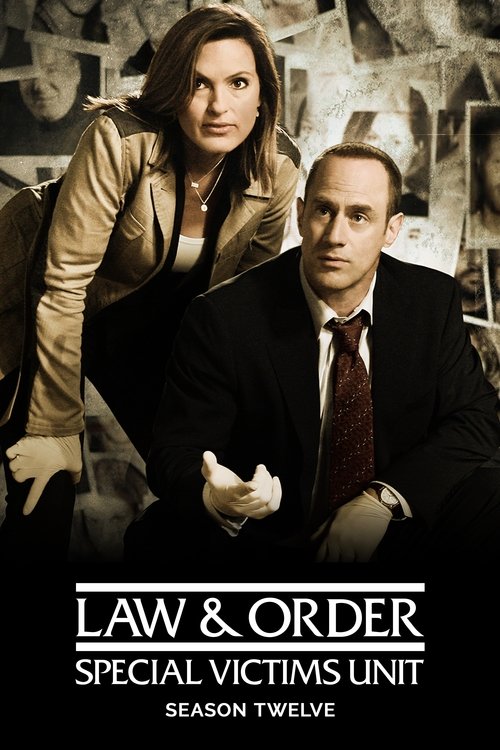
Law & Order: Special Victims Unit
Season 12 Analysis
Season Overview
No specific overview for this season.
Season Review
Categorical Breakdown
The narrative's focus remains on the specific crime and the perpetrator's individual malice, rather than systemic oppression or intersectional hierarchy. While the show features a diverse main cast and addresses cases that involve characters from different backgrounds, the plot does not exist to lecture on privilege. Characters are defined by their actions as criminals or investigators, not their immutable characteristics. The few points are for the show's constant tendency to explore social issues, a precursor to later, more politicized themes.
The season focuses on corruption within institutions like private security firms or failures in the foster care system, not hostility toward the American civilization itself. The legal and police institutions, represented by the main characters, are consistently upheld as the mechanism for justice, viewing them as shields against chaos. The ancestors and core American heritage are neither demonized nor celebrated, but the process of law is respected as the ultimate authority.
Detective Olivia Benson is a strong, highly competent female lead, but throughout most of this season, she remains within a strong, complementary partnership with the hyper-masculine Detective Elliot Stabler. The men in the squad room are generally depicted as competent and necessary to the team's success. An episode dealing with a man forcing a miscarriage on his girlfriend portrays an extreme form of anti-natalism as a criminal act, punishing the perpetrator for the crime rather than validating an anti-family message.
The season includes a plot where a lesbian couple is victimized by a rapist, treating their relationship as a given part of the crime story and a vehicle for a 'ripped from the headlines' case. The episode focuses purely on the criminal act and the search for justice. There is no presence of gender ideology or queer theory used to deconstruct the nuclear family; the narrative maintains a normative structure while simply including non-normative relationships as victims of crime.
As a police procedural, the show's moral framework is legal and secular, not spiritual, establishing a vacuum of traditional faith. However, this lack of faith is not translated into active hostility toward religion. There are no plots where traditional religious figures are systematically vilified as bigots or where Christian faith is painted as the root of evil. Morality is objective in that a crime is a violation of law, not merely subjective 'power dynamics'.