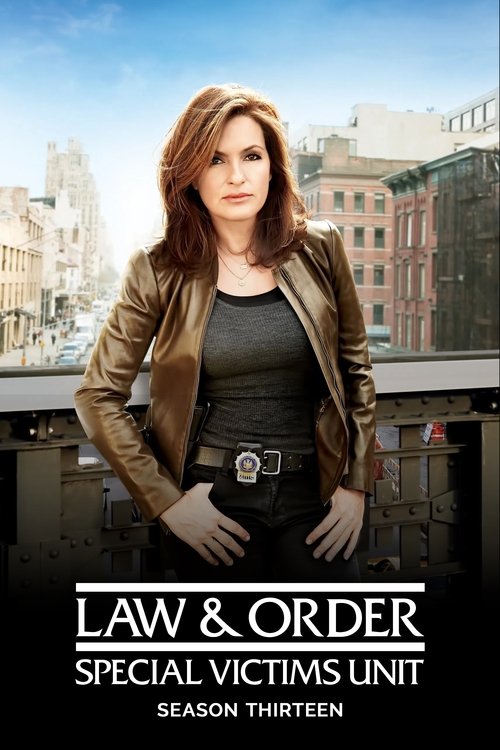
Law & Order: Special Victims Unit
Season 13 Analysis
Season Overview
Season 13 dealt with the departure of Detective Elliot Stabler from the Special Victims Unit after a shooting in the squad room.
Season Review
Categorical Breakdown
The casting is intentionally diversified with the introduction of Detective Nick Amaro (Latino) and Detective Amanda Rollins (Southern, white female) to replace the departed white male lead. Episodes occasionally touch upon class and national origin dynamics, such as the African immigrant maid versus the Italian diplomat in 'Scorched Earth.' However, the narrative does not consistently frame the justice system through an intersectional lens or vilify whiteness as a core theme; merit and competence are still the driving forces for the main squad members.
The score is elevated by the episode 'Official Story,' which heavily criticizes a private military contractor and the U.S. government's complicity in covering up the rape of a military daughter in Iraq. This storyline frames a powerful American institution as fundamentally corrupt and shielded from accountability. The show's overall structure, however, still positions the NYPD's SVU as an institution that serves as a shield against chaos and crime in the Western city.
Olivia Benson is established as the sole, strong, and highly competent lead, taking center stage after Stabler's exit. The new female detective, Amanda Rollins, is explicitly given a flawed character with a gambling problem and secrets, which prevents her from being a 'Mary Sue.' The dynamic shifts toward a female-centric unit, but the male detectives, Amaro and Fin, are not consistently depicted as incompetent or bumbling. The season does not overtly push an anti-natalist message, though career focus is dominant.
One episode, 'Justice Denied,' centers on a hate crime against the fiancé of Detective Fin Tutuola's gay son. The plot is focused on investigating and prosecuting the crime, but the prominence of a gay character as a primary victim elevates the score above a 1/10. The show does not delve into queer theory, deconstruct the nuclear family structure for the main characters, or promote gender ideology.
There are no major storylines that directly frame traditional religion, particularly Christianity, as a root of evil or a source of bigotry. The criminal actions are almost exclusively rooted in secular motives, psychological pathology, or social/political issues. The system of justice upheld by the detectives maintains a sense of objective moral truth.