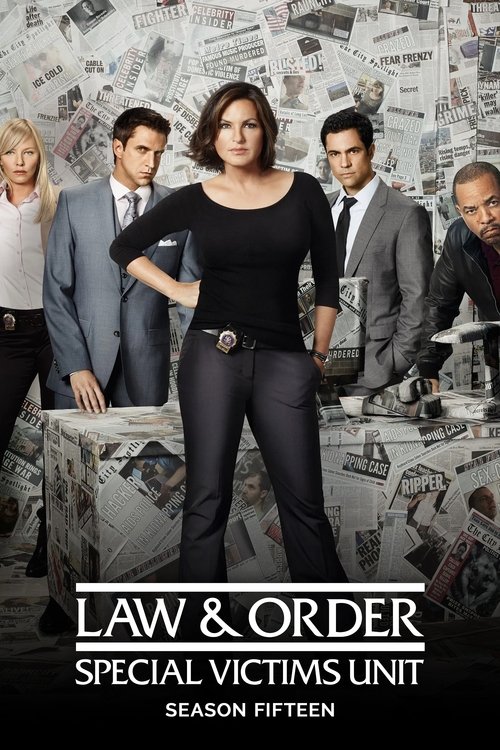
Law & Order: Special Victims Unit
Season 15 Analysis
Season Overview
No specific overview for this season.
Season Review
Categorical Breakdown
Plotlines are built around racial conflict, particularly in the episodes involving the shooting of a black teenager by a white celebrity and a police shooting of a young black boy. The narrative uses race as a central theme to examine prejudice and public outrage toward systemic issues within the justice system. The focus is on immutable characteristics driving the conflict and the perception of oppression and privilege.
The season contains multiple episodes that portray American institutions as corrupt or fundamentally flawed. Police corruption is a significant plot point with a storyline about officers suspected of raping women and another about high-ranking court officials engaging in a cover-up. The narrative suggests that justice is often undermined by the state's own systems and the misconduct of those sworn to uphold the law, framing institutions as hostile rather than protective.
Detective Benson's promotion to Sergeant places a woman in command of the unit, and she is consistently depicted as a strong, resilient leader. This follows a 'Girl Boss' trajectory. However, the character is not a 'Mary Sue,' as she grapples with intense trauma and post-traumatic stress. Her personal decision to begin the adoption process runs counter to an anti-natalist message, balancing the score.
The season contains minimal content focused on alternative sexualities or gender ideology. The cases primarily deal with heterosexual sex crimes, child abuse, and sex trafficking. Sexual identity is not a driving force or lecturing point in the narrative. One episode involves male victims of a crime set up by online escorts, but this does not center on queer theory or deconstruction of the nuclear family.
There are no major plots involving the vilification of Christianity or traditional religion. The morality is driven by the humanistic pursuit of justice and the objective truth of the crimes committed. Religion appears only tangentially in the context of a victim in a hate crime case, but the focus remains on the crime and the media's reaction, not on faith as a source of evil.