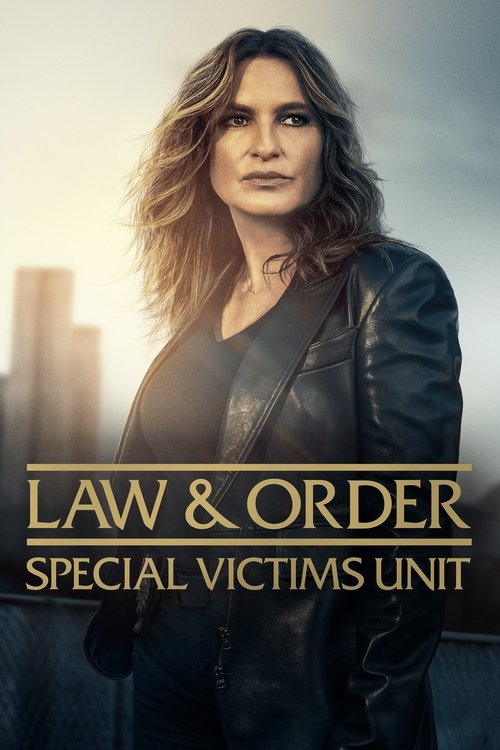
Law & Order: Special Victims Unit
Season 27 Analysis
Season Overview
No specific overview for this season.
Season Review
Categorical Breakdown
The narrative places heavy reliance on intersectional politics by making the immigration status of a key witness the central conflict of the season premiere, presenting an undocumented person as a victim of systemic oppression and a "smug, privileged rapist." The hero is arrested for protecting the immigrant witness from ICE, positioning her against the system. The multi-episode 'Purity' crossover also involves Ukrainian refugees being exploited, linking the villains to 'white supremacists' who use the term 'anchor babies,' a point explicitly framed as language used by racists.
The premiere episode frames a major American federal law enforcement agency, ICE, as a villainous force that actively impedes a rape investigation and obstructs justice. The show depicts the lead character breaking ranks and being arrested for obstruction while trying to protect a key witness from the federal agency, presenting a home institution as fundamentally corrupt and antagonistic to core American values of justice and due process.
Captain Olivia Benson continues as the morally and professionally flawless 'Girl Boss' lead, who is consistently the most 'empathetic, ferocious' person in the room and serves as the moral compass for the entire squad. However, the season does introduce a slight degree of nuance in the Amanda Rollins storyline where Benson removes Rollins from a case for becoming too emotionally compromised and failing to view a victim's sister as a victim herself, mitigating the absolute 'female leads are perfect' trope.
The main plot summaries for the season do not explicitly center alternative sexualities, transitioning, or gender ideology as the driving theme for the featured crimes, focusing instead on immigration, organized crime, and classic psychopathy. The category of sexual ideology is not a primary narrative driver in the available episode synopses for this season.
The season contains a major crossover arc that involves a plot centered on a 'scammy religious charity' being a front for eugenics, human trafficking, and the illegal adoption of children. The association of organized religion (a 'religious charity' aiming to help 'faithful' people adopt) with a vicious criminal enterprise reinforces the trope that traditional faith is a mask for moral evil and bigotry.