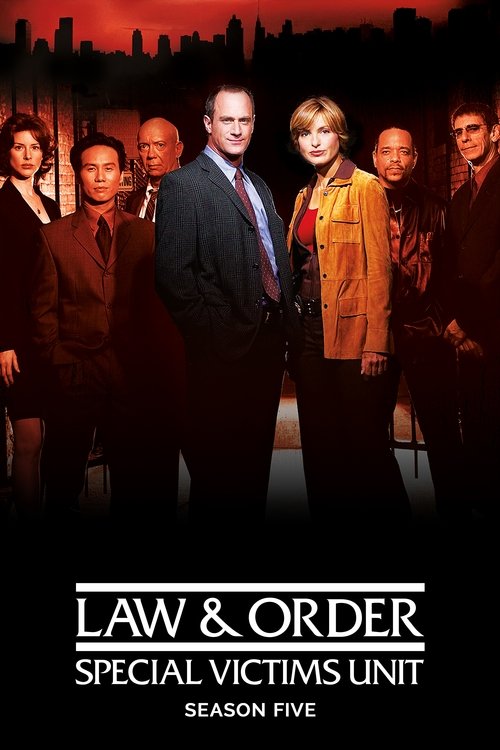
Law & Order: Special Victims Unit
Season 5 Analysis
Season Overview
No specific overview for this season.
Season Review
Categorical Breakdown
The narrative largely adheres to universal meritocracy; crimes are investigated and prosecuted based on the law and individual guilt, not collective identity politics. The episode 'Hate' features a detective actively discrediting the idea that a murder suspect's Islamophobia is a biologically-enforced, immutable characteristic, choosing to focus on a non-identity-based motive. Characters are primarily judged by their actions in relation to the crime, not by an intersectional hierarchy of privilege or oppression.
The show is critical of many domestic institutions, which is a standard feature of the 'Law & Order' format. The episode 'Brotherhood' frames a respected American fraternity's hazing rituals as corrupt and violent, and 'Home' critiques a traditional family structure where an abusive mother hides her children through homeschooling. While this demonstrates a lack of 'gratitude' for these institutions, the narrative never frames Western civilization as fundamentally corrupt or racist, nor does it elevate foreign or 'other' cultures as spiritually superior. The show's two detectives represent order within the system, providing a shield against chaos.
The female leads, Olivia Benson and the new ADA Casey Novak, are strong, competent professionals who are central to the work of the unit. Benson works in a complementary partnership with the male detective Elliot Stabler; he is hot-headed and traditional, while she provides empathy and intuition. The male characters are competent, not consistently emasculated or portrayed as bumbling idiots. While the show has a strong pro-victim, pro-consent posture, it does not consistently demonize motherhood as a 'prison' or suggest career is the *only* fulfillment.
The season directly centers alternative sexualities and critiques the normative structure. The episode 'Abomination' frames the 'ex-gay' movement and a father’s religious denial of his gay son as the source of violence and murder, clearly positioning the traditional family view as bigoted and destructive. This explicitly moves the show beyond 'sexuality is private' and into the promotion of alternative sexual identities as a moral good against conservative resistance. Other episodes, such as 'Lowdown,' explore the complexities and destructive nature of men leading a secret homosexual life.
Organized religion and faith-based morality are frequently portrayed as problematic or the source of crime and abuse. The 'Abomination' episode links conservative religion and a desire for 'sexual reeducation' to murder, casting it as an unscientific and harmful pursuit. Another episode, 'Careless,' involves a child's death during a prayer vigil at a late-night church service, suggesting a negative consequence of fervent religious practice. However, the detectives themselves operate with a strong sense of Objective Truth and transcendent moral law—that the crimes they investigate are inherently 'especially heinous'—which prevents the score from reaching a maximum.