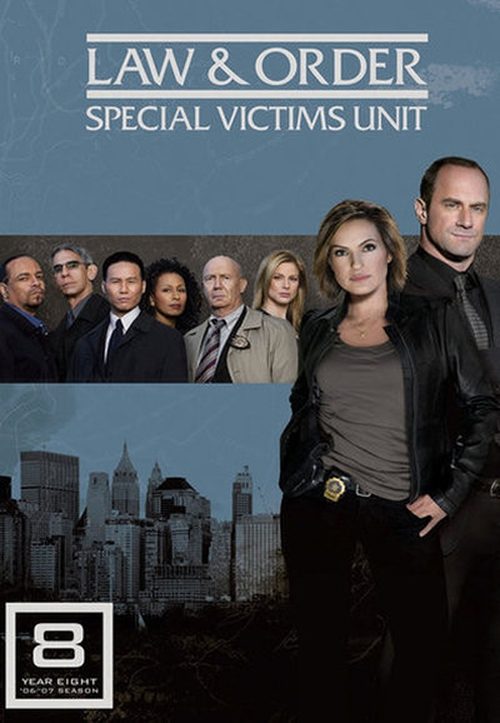
Law & Order: Special Victims Unit
Season 8 Analysis
Season Overview
No specific overview for this season.
Season Review
Categorical Breakdown
Characters are judged primarily by their professional competence and individual moral failings or merits. The focus remains on the specific crime, not on a systemic critique of society through an intersectional hierarchy. The diverse main cast functions within a standard colorblind-ish police procedural structure.
The institutions of law enforcement and the justice system, though occasionally shown to be flawed or subject to loopholes, are consistently portrayed as the essential defense against chaos. The show does not frame its home culture or Western civilization as fundamentally corrupt or evil, but rather as having individuals and corporations who commit evil within it.
Olivia Benson is a highly competent lead, but she is not depicted as an infallible 'Mary Sue' and faces personal conflict. The male lead, Elliot Stabler, is a powerful figure whose storyline centers on his struggle to fulfill his role as a husband and father, including dealing with a surprise pregnancy and an excessive force charge. The men are not universally bumbling or toxic.
The season addresses a crime involving a gay male sex worker in the episode 'Sin,' which engages with the realities of violence against that community. This addresses an alternative sexuality through a crime lens, but the plot does not center on deconstructing biological reality or promoting gender ideology, keeping the score low relative to the 10/10 definition.
The episode 'Sin' features a pastor who preaches intolerance and is implicated in a crime, serving as a critique of religious hypocrisy. This targets a specific figure's failure rather than condemning all faith as the source of evil. The overall series narrative maintains a clear objective truth that the violent crimes investigated are unequivocally wrong, upholding a standard of transcendent morality.