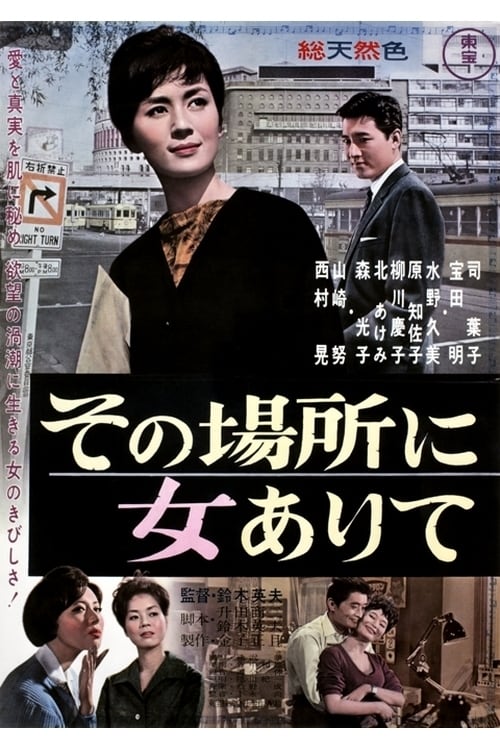
Woman of Design
Plot
Story of romance and rivalry between two ad agencies vying for the same account with a pharmaceutical firm.
Get the Weekly Woke Watchlist
New and trending movies scored for woke bias, preachy messaging, and forced political themes — before you waste your evening.
No spam. One useful email per week.
Overall Series Review
Categorical Breakdown
The film features an entirely Japanese cast telling a story specific to Japanese corporate society in 1962. Characters are defined by their professional competency and ambition versus the gender barriers of the time. The narrative does not utilize an intersectional hierarchy of race or immutable characteristics as defined by the Western 'woke mind virus,' nor does it vilify 'whiteness' or include forced diversity.
The setting is post-war Japan's burgeoning economic boom, and the film critically examines the corporate rat race and consumerism's impact on personal life. This is a specific critique of a modern economic system (unfettered corporatism/consumerism) within the home culture, not a generalized hostility toward all of Japanese civilization or its ancestors. Core cultural institutions like the family are shown as a point of societal pressure, not as fundamentally corrupt.
The core of the movie's drama is the conflict of a career woman in a male-centric society. The main character, Ritsuko, is a highly competent professional, a 'Girl Boss' archetype for her era, who is explicitly resisted and undercut by 'useless men.' She is told her job 'poisons' her youth, and she is subject to attempted rape and professional sabotage by a male colleague. The narrative highlights the pressure to abandon career for a 'binary choice' of marriage before the social stigma of being a 'Christmas cake.' The film is a clear, yet complex, depiction of a woman striving for fulfillment outside traditional anti-natalist expectations.
The narrative centers on traditional heterosexual romance and its conflict with career ambition. Alternative sexualities are not a subject of the plot or theme. The structure of the nuclear family is treated as the normative, though oppressive, social expectation of the era, without any discussion of gender ideology or queer theory deconstruction.
The film's focus is on the secular drama of corporate rivalry and personal ambition. There is no evidence of anti-religious sentiment or hostility toward traditional faith. The moral and spiritual critique is directed at the ethics of the advertising industry and the emptiness of a purely consumerist, materialistic society. Objective truth is implicitly affirmed by the moral condemnation of workplace sabotage and betrayal.
Get the Weekly Woke Watchlist
New and trending movies scored for woke bias, preachy messaging, and forced political themes — before you waste your evening.
No spam. One useful email per week.