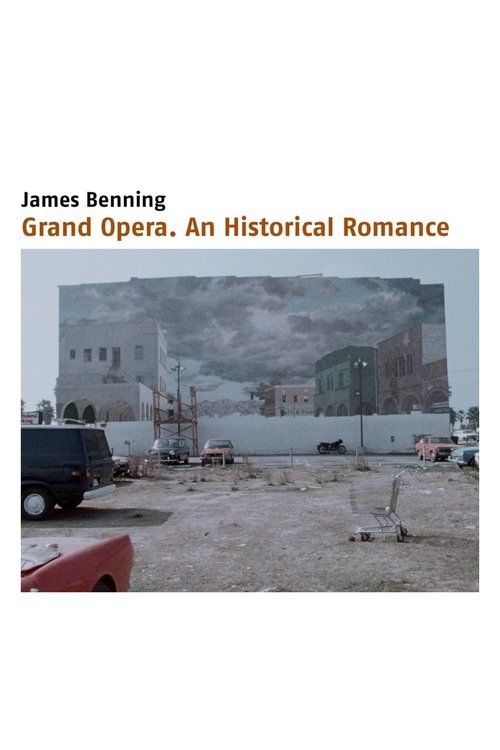
Grand Opera: An Historical Romance
Plot
Grand Opera marks a stock-taking of Benning's work and his life, presenting a personal and artistic autobiography woven together with a series of events dealing with the historical development of the number pi, Benning's travels, and homages to Michael Snow, Hollis Frampton, George Landow (Owen Land), and Yvonne Rainer.
Get the Weekly Woke Watchlist
New and trending movies scored for woke bias, preachy messaging, and forced political themes — before you waste your evening.
No spam. One useful email per week.
Overall Series Review
Categorical Breakdown
The film is an abstract, non-narrative work focused on the history of mathematics (pi) and the filmmaker’s personal autobiography. It contains no traditional characters, character merit is irrelevant, and there is no narrative space for lectures on intersectional hierarchy or the vilification of any demographic.
The filmmaker's inclusion of a compilation of 'every house he ever lived in' and the construction of his 'own kind of history' is an affirmative act of self-insertion and documenting his personal heritage, not an act of hostility toward his home or ancestors. The film respects the Western intellectual tradition by focusing on the history of Pi.
The film lacks a traditional plot and characters. It features no female leads to embody the 'Girl Boss' trope and no narrative dynamics to enact the emasculation of males or anti-natalist messaging. The film's structuralist concerns render these gendered themes nonexistent.
The focus of the film is on the abstract history of Pi and personal travelogue. There is no narrative or dialogue to center sexual ideology, deconstruct the nuclear family, or lecture on gender theory. Sexuality remains a private matter that is not addressed by the film.
The film is concerned with mathematical, cinematic, and personal history. This secular focus is not an active form of anti-theism. It does not contain any traditional religious figures, and there is no narrative to suggest that traditional religion is the root of evil or that morality is purely subjective power dynamics.
Get the Weekly Woke Watchlist
New and trending movies scored for woke bias, preachy messaging, and forced political themes — before you waste your evening.
No spam. One useful email per week.