Memento
Plot
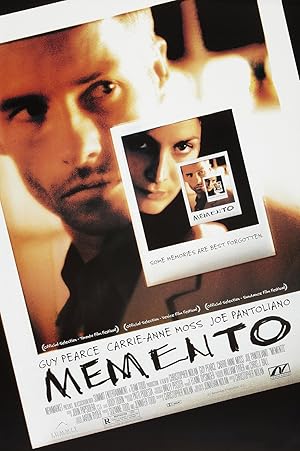
Memento chronicles two separate stories of Leonard, an ex-insurance investigator who can no longer build new memories, as he attempts to find the murderer of his wife, which is the last thing he remembers. One story line moves forward in time while the other tells the story backwards revealing more each time.
Get the Weekly Woke Watchlist
New and trending movies scored for woke bias, preachy messaging, and forced political themes — before you waste your evening.
No spam. One useful email per week.
Overall Series Review
Categorical Breakdown
The plot centers entirely on one man's personal trauma and his quest for revenge, judging characters solely on their actions and trustworthiness. The movie contains no elements of intersectional hierarchy, lectures on privilege, or vilification based on immutable characteristics. Casting choices do not appear to be politically driven.
The narrative is a modern, psychological crime story focused on individual pathology and betrayal in a domestic setting. The film presents no critique or hostility toward Western civilization, its institutions, or the protagonist's home culture. There is no presence of the 'Noble Savage' trope.
Female characters primarily adhere to classic film noir conventions, being either the murdered 'prize' or the 'femme fatale' who manipulates the male protagonist for her own gain. The main male character is disabled and vulnerable, though he channels his pain into a violent quest for vengeance. Women are powerful due to cunning and duplicity, not a 'Girl Boss' form of competence, and the central motivator is a traditional husband avenging his wife.
The film does not feature or focus on alternative sexualities, gender ideology, or the deconstruction of the nuclear family unit. The central pairing of Leonard and his wife serves as the foundation for the protagonist's motivation.
The core theme is the subjective nature of truth and the self-manufacturing of purpose through vengeance, which presents a world governed by moral relativism and a spiritual vacuum. While the film is not explicitly hostile to religion, its philosophical conclusion that objective truth is inaccessible or irrelevant aligns with a rejection of a higher moral law.
Get the Weekly Woke Watchlist
New and trending movies scored for woke bias, preachy messaging, and forced political themes — before you waste your evening.
No spam. One useful email per week.