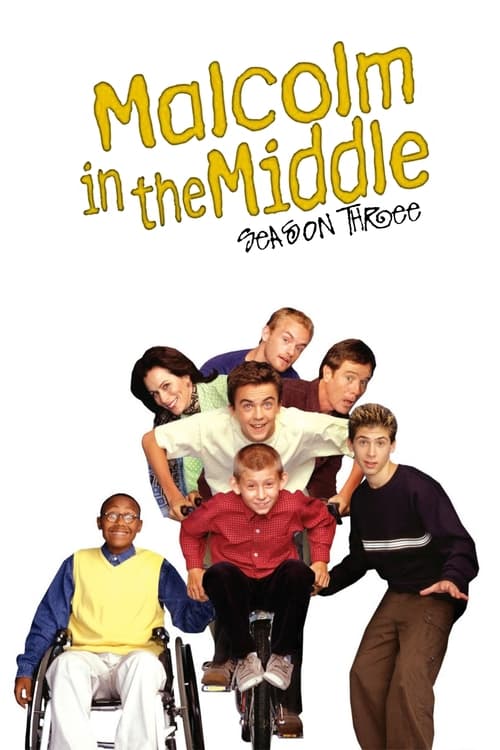
Malcolm in the Middle
Season 3 Analysis
Season Overview
Francis leaves military school to work at a resort in Alaska, encountering new challenges under his strict boss, Lavernia. Back home, Malcolm and his brothers continue to stir up trouble, leading to humorous and unpredictable situations.
Season Review
Categorical Breakdown
Characters are judged by their individual merit, intelligence, and flaws, not by race or immutable characteristics. Francis marries Piama, an Alaskan Native-American, and this interracial marriage is portrayed as a natural character development that is ultimately loving and successful. The series features other minority characters, like Malcolm's best friend Stevie, whose family breaks stereotypes. The family's poverty and social struggles are framed through a lens of class and individual character, not through a lecture on systemic white privilege.
The central premise frames the family's reality as bleak and critiques the structure of American meritocracy and capitalism, suggesting social institutions are corrupt. This aligns with a mild hostility toward certain foundational Western structures. However, the narrative does not demonize American ancestry or culture wholesale, and the family unit itself is consistently portrayed as the only institution that holds the characters together against the chaos of the outside world.
Gender roles are heavily subverted and male characters are consistently emasculated. Hal is portrayed as a bumbling, emotionally vulnerable, and often childish man, while Lois is the dominant, controlling, and ruthlessly competent figure who holds the family together through force. All four sons are incompetent or toxic in their own ways, with their male energy constantly stifled by Lois. This dynamic aligns with the trope of elevating the female lead by making all males idiotic. However, Lois's life is utterly centered on motherhood and family, which directly contradicts the 'anti-natalism' narrative.
The season's primary plot points and character arcs do not center on alternative sexualities, gender identity, or queer theory. The central family structure is the traditional male-female pairing and nuclear unit, albeit a dysfunctional one. Sexuality is a private matter, and there is no ideological lecturing or overt effort to deconstruct the biological reality or the standard family structure.
The series generally avoids overt political or religious commentary. Traditional religion is not vilified or presented as the root of evil. Moral questions are usually grounded in immediate consequences and self-interest, reflecting a low-level moral relativism inherent to a chaotic sitcom, but it does not aggressively argue against or promote a transcendent moral law or faith as a source of strength.