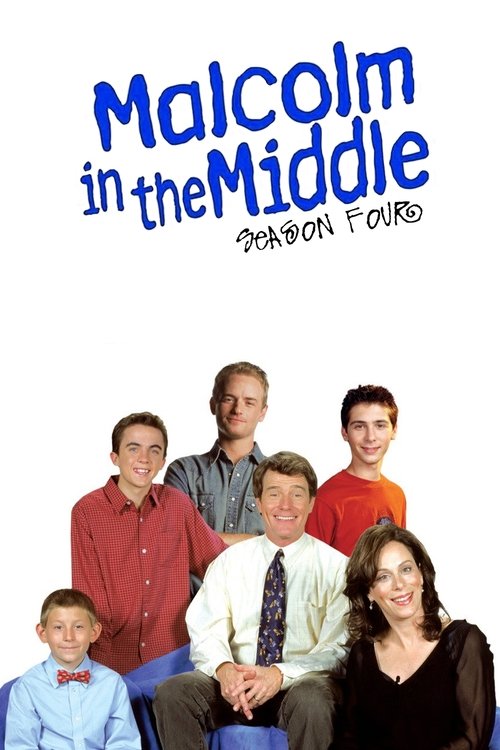
Malcolm in the Middle
Season 4 Analysis
Season Overview
The family dynamics shift with the arrival of baby Jamie. Malcolm navigates teenage life, including romantic interests and school pressures, while Hal and Lois juggle parenting their growing brood.
Season Review
Categorical Breakdown
The plot focuses on meritocracy (Malcolm’s genius) and class struggle (the family’s poverty) rather than race or immutable characteristics. Malcolm's black best friend, Stevie, is portrayed as an intelligent Krelboyne, subverting stereotypes. There is no vilification of 'whiteness' or forced insertion of diversity; character traits, like intelligence and incompetence, drive the narrative, not racial identity.
The series presents an unflinching critique of the difficulties faced by the working-class family—they are perpetually broke, stressed, and their home is falling apart. This is social commentary on poverty and bureaucracy, not an indictment of Western civilization or American heritage. The family unit, despite its chaos, is consistently portrayed as the central emotional anchor and institution.
Lois serves as the quintessential 'Girl Boss' figure—an aggressive, unsentimental disciplinarian who wields all the authority. Hal is a demonstrably emotional, nurturing, and often incompetent father, effectively reversing traditional gender roles for comedic effect. However, their marriage is depicted as passionate and stable, with Lois's motherhood being a central, albeit stressful, part of the narrative, not a 'prison' to be escaped for career fulfillment. The score is raised due to the overt and successful emasculation of the father figure and the domineering female lead, but kept moderate due to the celebration of their complementary, committed relationship.
The season adheres to a normative structure, centering on the traditional male-female pairing of Hal and Lois and the nuclear family. There are no plot lines that revolve around alternative sexualities, gender ideology, or the deconstruction of the family unit through a queer theory lens. Sexuality remains a private matter, mostly addressed via Malcolm's dating life and Hal and Lois's relationship.
The show is focused on domestic chaos, school life, and personal schemes. Religious themes are virtually absent from the narrative, with no plot points or commentary dedicated to framing traditional religion as a source of evil or bigoted behavior. The show operates on a system of universal, secular consequences and moral codes derived from family and social dynamics.