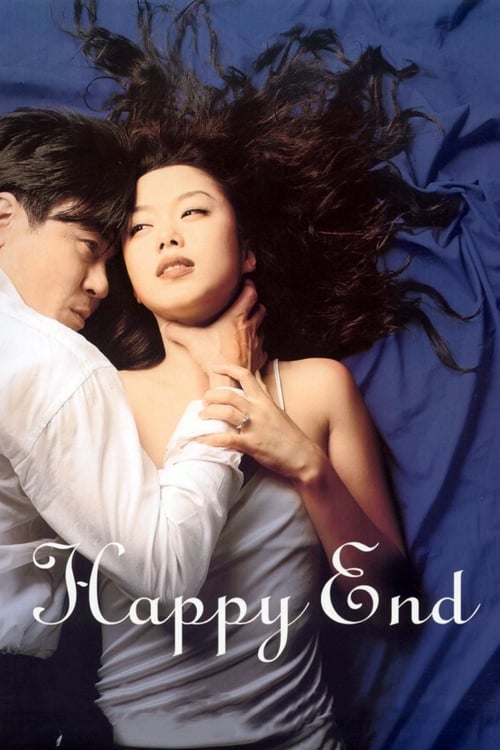
Happy End
Plot
When a wife becomes the breadwinner of her family after her husband loses his job, adultery becomes part of her life.
Get the Weekly Woke Watchlist
New and trending movies scored for woke bias, preachy messaging, and forced political themes — before you waste your evening.
No spam. One useful email per week.
Overall Series Review
Categorical Breakdown
The movie is a South Korean production focusing on a domestic tragedy. All main characters share the same ethnicity and culture. Character conflict is based purely on personal morality, economic status, and psychological state, not on race or intersectional hierarchy. The narrative does not contain vilification of 'whiteness' or forced diversity.
The conflict is centered on the marital breakdown within a contemporary Korean society due to unemployment and infidelity. The plot does not contain themes of civilizational self-hatred, demonization of ancestors, or framing home culture as fundamentally corrupt. The focus is on the institution of marriage under economic duress.
The core premise presents the female lead as a successful career 'Girl Boss' who is the family's sole breadwinner, while the husband is emasculated by his domestic role. The wife views her role as a mother and wife as restrictive and neglects her infant daughter, even resorting to giving her sleeping pills to facilitate an affair, which is a strong anti-natal action. However, the female lead is far from a perfect 'Mary Sue' and is ultimately a deeply flawed character whose transgressions lead to a tragic end.
The narrative is a traditional love-triangle thriller focusing solely on heterosexual desire, marriage, and infidelity. The movie adheres to a normative structure with a traditional male-female pairing as the standard, albeit a rapidly dissolving one. There is no presence of alternative sexualities, gender ideology, or lecturing on queer theory.
The movie is a secular psychological drama that does not feature religion as a primary theme or source of conflict. Traditional religion is not framed as the root of evil, and no Christian characters are depicted as bigots or villains. The film's darkness arises from the characters' personal moral failings and psychological instability, which falls into the moral relativism typical of the noir/thriller genre, but it is not an explicit anti-theist lecture.
Get the Weekly Woke Watchlist
New and trending movies scored for woke bias, preachy messaging, and forced political themes — before you waste your evening.
No spam. One useful email per week.