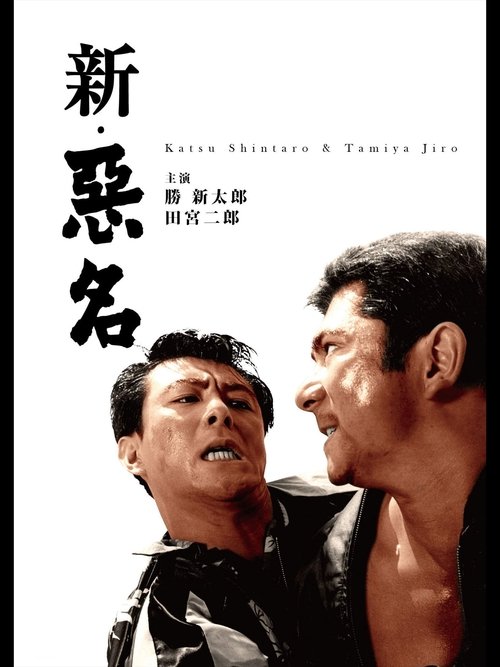
The Notorious Man's Return
Plot
Get the Weekly Woke Watchlist
New and trending movies scored for woke bias, preachy messaging, and forced political themes — before you waste your evening.
No spam. One useful email per week.
Overall Series Review
Categorical Breakdown
The movie is a Japanese period-specific yakuza narrative. All characters are judged by their reputation, actions, and adherence to the yakuza code of honor and loyalty. The narrative does not employ an intersectional lens; race and immutable characteristics are not a factor in the protagonist's success or failure. The casting is historically authentic to its Japanese setting.
As a film from a non-Western cultural tradition (Japanese cinema), the concept of 'hostility toward Western civilization' does not apply. The narrative is focused internally on Japanese society, dealing with conflicts between traditional yakuza codes and modernization or rival gang structures. The film displays an implicit respect for the in-group's cultural norms and ancestral sacrifices.
Gender dynamics are complementarian, adhering to the mid-century Japanese setting. The primary focus is on the male protagonist's protective masculinity and vitality. Female characters, such as geishas or wives, serve as emotional anchors, moral compasses, or figures of traditional beauty and support, not as 'Girl Boss' tropes. There is no anti-family or anti-natal messaging.
The core of the plot focuses on the hyper-masculine world of the yakuza and the romantic interest is exclusively a traditional male-female pairing. The narrative adheres to a normative structure, with no inclusion or centering of alternative sexual ideologies or any form of gender theory. Sexuality remains a private aspect of the story, not a public political statement.
The spiritual landscape of the film is largely secular, concerning itself with a criminal code of honor and duty, but it displays no hostility toward religion, specifically Christianity. Morality is judged by the characters' actions within their own code of conduct (giri and ninjo), implying an objective truth within their world rather than embracing moral relativism.
Get the Weekly Woke Watchlist
New and trending movies scored for woke bias, preachy messaging, and forced political themes — before you waste your evening.
No spam. One useful email per week.