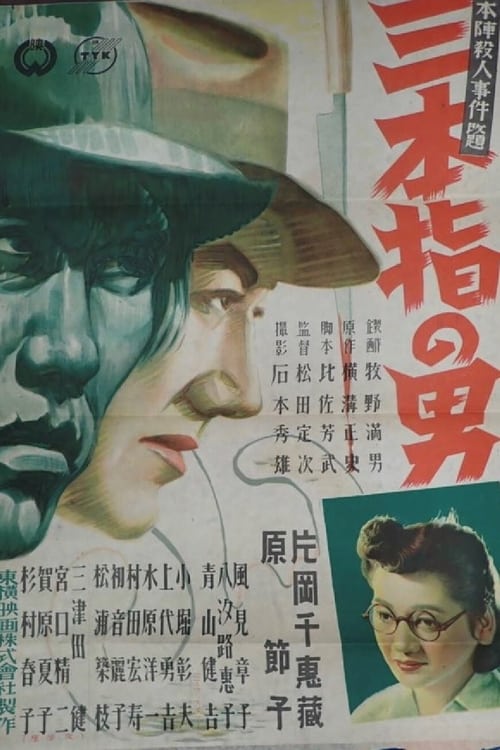
Three-Fingered Detective
Plot
Being acquainted with the bride's uncle, a famed private detective is invited to a wedding ceremony. The groom's family is moneyed and owns large tracts of land. The bride is a former teacher and was rumoured to have had an affair, which explains why the groom's family opposed the union. On the night of the ceremony the bride and groom are killed in a sealed room. There is evidence left, however, as there is a hand print on the wall albeit with only the trace of three fingers.
Get the Weekly Woke Watchlist
New and trending movies scored for woke bias, preachy messaging, and forced political themes — before you waste your evening.
No spam. One useful email per week.
Overall Series Review
Categorical Breakdown
The central conflict revolves around class and family pride, as a wealthy, traditional family opposes the eldest son marrying a commoner/schoolteacher. The detective is judged purely on his intellectual ability to solve the case, exemplifying meritocracy. There is no focus on race, 'whiteness,' or a forced hierarchy based on immutable characteristics. The narrative critiques the rigidity of a specific class-based tradition but does not use an intersectional lens.
The setting is Japan, not the West, and the critique is aimed at the internal flaws (rigid classism and traditional pride) of the wealthy Ichiyanagi family. The narrative explores Japanese culture and traditions (like the koto and the old *honjin* residence) as the backdrop for the mystery. There is no demonization of the core culture or ancestors, nor is there a framing of an external/alien culture as morally superior to one's own.
The female character (the bride) is defined by her attempts to navigate a social hierarchy through marriage and is rumored to have had an affair, fitting a classic melodrama/detective trope. The narrative does not feature the 'Girl Boss' archetype, nor is there any overt anti-natalist or anti-family messaging. Gender roles are traditional for the time and place, and the focus remains on the crime plot rather than a lecture on gender power dynamics.
The plot centers on a traditional, heterosexual marriage and the murder that results from it. There is no presence of alternative sexual ideologies, deconstruction of the nuclear family unit, or centering of gender identity. The structure is normative, focusing on traditional male-female pairing as the standard premise for the crime.
The movie is a secular, logical mystery focused on solving an impossible crime. The solution involves human deception and motive, not a critique of religious faith. Traditional religion is neither a source of strength nor a root of evil, and morality is based on the objective truth of the crime, not subjective 'power dynamics.'
Get the Weekly Woke Watchlist
New and trending movies scored for woke bias, preachy messaging, and forced political themes — before you waste your evening.
No spam. One useful email per week.