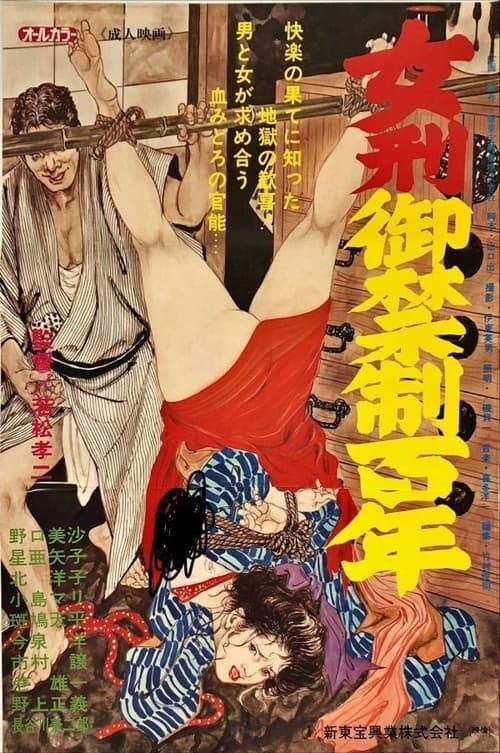
Torture Chronicles Continues: 100 Years
Plot
A sequel to Torture Chronicles: 100 Years of Torture Inquisition.
Get the Weekly Woke Watchlist
New and trending movies scored for woke bias, preachy messaging, and forced political themes — before you waste your evening.
No spam. One useful email per week.
Overall Series Review
Categorical Breakdown
The film is Japanese and set in a Japanese historical context. There is no depiction of 'whiteness' as evil, nor any forced insertion of Western-style diversity or 'race-swapping.' The story's power dynamic is based on historical authority and gender, not modern intersectional hierarchy. Character merit is irrelevant to the plot; victims are chosen by authority and chance.
The film is a critique of historical cruelty within a specific Japanese institutional/historical setting. The narrative does not contain hostility toward Western civilization, its ancestors, or core institutions. The film does not frame Western home culture as fundamentally corrupt or racist, as its focus is entirely on a non-Western historical context. No external cultures are depicted as morally superior to the West.
Female characters are almost universally depicted as objects of torture and violence, lacking agency and being victimized by male authority figures. This is the antithesis of the 'Girl Boss' or 'Mary Sue' trope. Men are depicted as cruel and toxic figures of authority, but not bumbling idiots. The film does not contain anti-natalist messaging; its focus is on pure exploitation and sexual violence, placing it far outside the modern feminist narrative defined here, though it is misogynistic in its execution.
The primary dynamic is between male torturers and female victims within an exploitative and non-normative sexual context. While the genre involves non-traditional sexual acts, it does not center alternative sexualities as a positive identity, nor does it contain any political lecturing on 'gender ideology' or 'queer theory.' The narrative does not focus on deconstructing the nuclear family as a social goal, but rather on explicit abuse and perversion.
The film is set during a historical period of torture/inquisition, which may imply a critique of oppressive historical institutions that often included religious authority. However, the primary focus is on the physical cruelty itself, not a direct, philosophical attack on faith or transcendent morality. Faith is not presented as a source of strength, but traditional religion is not the root of all evil in the modern sense; the film focuses on historical institutional abuse.
Get the Weekly Woke Watchlist
New and trending movies scored for woke bias, preachy messaging, and forced political themes — before you waste your evening.
No spam. One useful email per week.