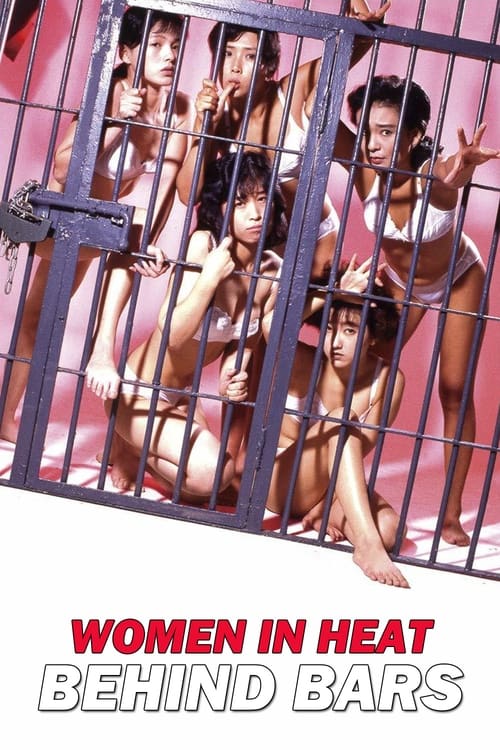
Women in Heat Behind Bars
Plot
Shinobu Himeno is arrested and thrown into Asahi Female Prison for being an unwilling accomplice in a jewelry store robbery. She’s to serve her sentence in the infamous Cell Block 21, a dismal area full of tough, sex-starved women. Himeno is bullied and abused by inmates and guards. After being framed for starting a fight, she is taken away and tied up. Can the shy Himeno ever escape this living hell?
Get the Weekly Woke Watchlist
New and trending movies scored for woke bias, preachy messaging, and forced political themes — before you waste your evening.
No spam. One useful email per week.
Overall Series Review
Categorical Breakdown
The film operates within a culturally homogeneous Japanese setting. The conflict is based solely on a power hierarchy between prison staff and inmates, and between inmates themselves based on dominance and physical toughness. Character judgment is based on an individual's capacity for cruelty or resilience, not on race or an intersectional hierarchy. There is no vilification of whiteness or forced insertion of diversity, as the cast is entirely Japanese.
The narrative frames a specific institution—the Japanese female prison system—as fundamentally corrupt, abusive, and oppressive, thereby demonizing a component of the home culture's infrastructure. This critique of systemic institutional rot does not, however, expand into a broad demonization of Japanese heritage, its ancestors, or Western civilization, keeping the focus tightly on the prison's internal sadism.
The movie subverts the 'Girl Boss' dynamic by portraying the female-dominated environment as a hyper-brutal and corrupt hellscape where women actively oppress and abuse one another. The female guards and the warden are depicted as sadistic villains, and the inmates are a mixture of victims and predators. The protagonist is far from a 'Mary Sue,' instead being a fragile victim forced into survival. The core message is female-on-female cruelty, not female superiority, and anti-natalism is not a theme.
Non-normative sexual dynamics are an essential and pervasive element of the plot, which is characteristic of the Women in Prison genre. Nearly every female character's identity and power are centered around sexual dominance and sexual behavior with other women. The narrative entirely replaces the traditional male-female pairing and nuclear family structure with an explicit hierarchy of alternative sexualities and sexual violence within the prison walls.
The core of the conflict is institutional corruption and the physical survival of the protagonist, with no explicit reference or hostility toward religion or faith. The prison setting, while morally destitute, does not engage in a philosophical debate on Christian morality or promote a spiritual vacuum as a virtue. The moral law that is broken is criminal and institutional, not theological.
Get the Weekly Woke Watchlist
New and trending movies scored for woke bias, preachy messaging, and forced political themes — before you waste your evening.
No spam. One useful email per week.