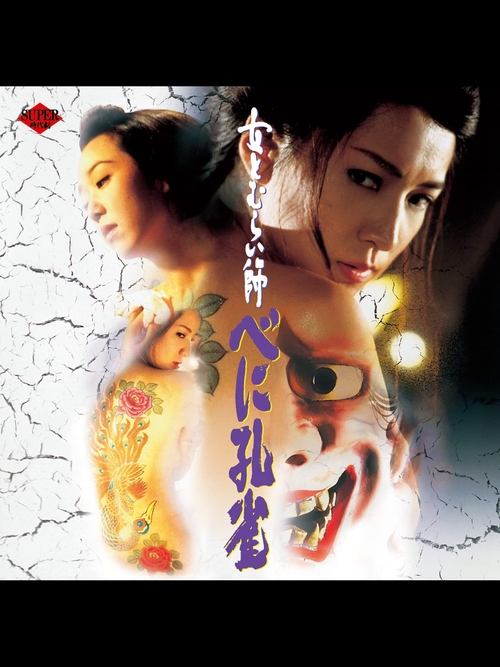
Raging Peacock
Plot
Get the Weekly Woke Watchlist
New and trending movies scored for woke bias, preachy messaging, and forced political themes — before you waste your evening.
No spam. One useful email per week.
Overall Series Review
Categorical Breakdown
The film is an obscure 1996 Japanese production and is not concerned with American-style identity politics or intersectional hierarchy. The narrative is focused on local or genre-specific conflicts, not the vilification of 'whiteness' or a lecture on privilege. Characters are defined by their actions and place in the criminal/social structure, reflecting a universal meritocracy of capability for the story's genre.
As a Japanese film from the 1990s, the concept of hostility toward Western civilization (oikophobia) does not apply. The film’s focus is regional and does not comment on, let alone demonize, Western institutions or ancestors. Its setting and themes are self-contained, reflecting a normative structure for its place of origin, thus scoring at the lowest possible level.
As an obscure 1996 action/crime feature, the narrative does not center around the modern 'Girl Boss' trope or explicit anti-natalism. While female roles may be secondary to male leads common in the genre, there is no evidence of a systematic emasculation of males or motherhood being framed as a 'prison.' The score reflects a traditional, if not complementary, gender dynamic based on the context of its time and genre.
The film is a mid-90s V-Cinema feature from Japan. It operates entirely outside the modern 'Queer Theory Lens.' There is no evidence of alternative sexualities being centered as a political statement, no focus on deconstructing the nuclear family as an 'oppressive' structure, and no gender ideology lecturing.
The narrative is presumed to be focused on action, crime, or drama based on its genre and origin. There are no known plot points that explicitly critique or vilify Christianity or traditional faith systems. The moral framework is likely to be a classic crime/justice dichotomy or a commentary on the local social order, not a debate on subjective morality versus objective truth.
Get the Weekly Woke Watchlist
New and trending movies scored for woke bias, preachy messaging, and forced political themes — before you waste your evening.
No spam. One useful email per week.