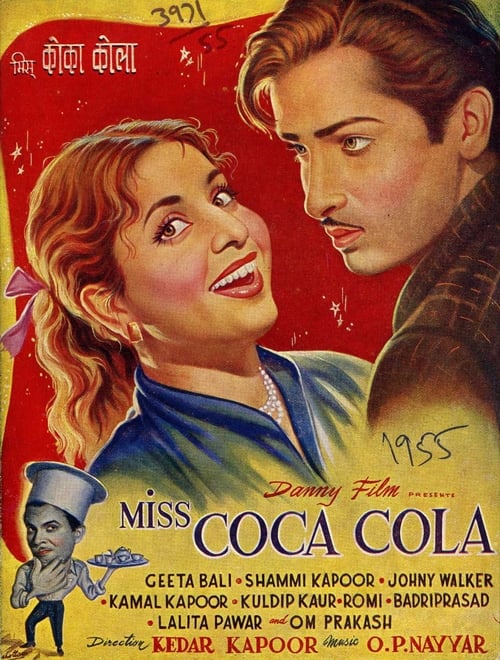
Miss Coca Cola
Plot
Miss Coca Cola is a 1955 Indian Hindi-language romantic thriller film directed by Kedar Kapoor
Get the Weekly Woke Watchlist
New and trending movies scored for woke bias, preachy messaging, and forced political themes — before you waste your evening.
No spam. One useful email per week.
Overall Series Review
Categorical Breakdown
The story is driven by a class-based conflict—poverty and the dowry system—rather than a lecture on race or intersectional hierarchy. The focus is on the moral content of the characters' actions as they seek justice, reflecting a universal meritocracy of good and evil.
The film critiques social flaws and corruption within the local system, such as dowry demands and false arrests, but the main characters fight to correct the injustice, viewing core societal institutions (like the family and justice) as worthy of defense. There is no demonization of the nation's ancestors or a spiritual elevation of external cultures.
The female lead, Ganga, shows immense agency by taking on the difficult role of a nightclub dancer to save her father, demonstrating strength and resourcefulness. However, her core motivation is entirely complementarian and family-centric: saving her father, supporting her siblings, and eventually forming a traditional bond with the male lead. Motherhood and family are celebrated as the highest purpose, not presented as a 'prison.'
The narrative centers entirely on a traditional male-female romantic pairing and the preservation of the nuclear family structure. The content adheres strictly to a normative structure, and there is no presence of alternative sexualities or gender theory to deconstruct biological or familial realities.
The core of the plot is an objective moral quest to right a grievous wrong (false murder accusation). Characters operate under a clear moral law where seeking justice is paramount. The film is devoid of hostility toward religion or promotion of moral relativism; the battle is clearly defined as one of good versus evil and truth versus falsehood.
Get the Weekly Woke Watchlist
New and trending movies scored for woke bias, preachy messaging, and forced political themes — before you waste your evening.
No spam. One useful email per week.