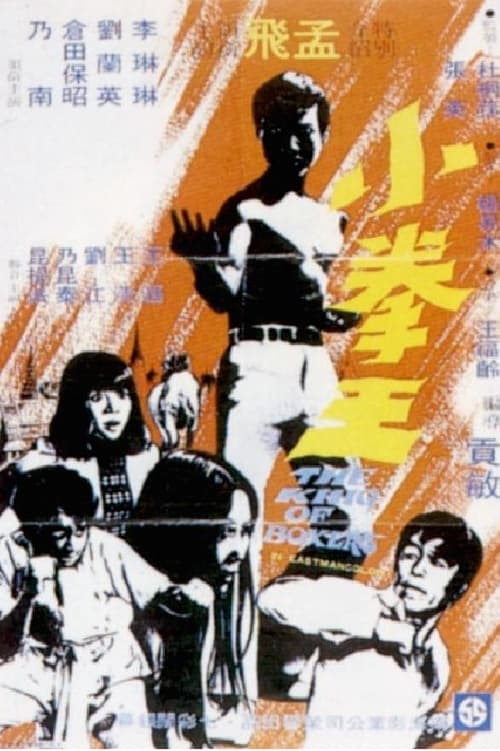
The King of Boxers
Plot
A King Boxer named Chow (Meng Fei) visits a friend in Thailand. She introduces him to her boyfriend, who's a Thai boxer. Chow saves the Thai boxer from some thugs and the two become friends. Chow teaches him the knife style. Meanwhile back in China, Chow's brother and sister look after his kung fu school. A Japanese martial artist (Kurata) visits the school looking for Chow. Kurata fights and beats his brother instead and develops strong liking for Chow's sister. Chow returns to China and has to defend his school's honor against Kurata.
Get the Weekly Woke Watchlist
New and trending movies scored for woke bias, preachy messaging, and forced political themes — before you waste your evening.
No spam. One useful email per week.
Overall Series Review
Categorical Breakdown
The core conflict is a classic martial arts rivalry between a Chinese boxer and a Japanese martial artist over the honor of a kung fu school. Characters are judged solely on their fighting skill, discipline, and personal honor. The narrative is a clear example of universal meritocracy with no focus on intersectional hierarchy or lectures on privilege.
The plot's central motivation is the protagonist's return to defend his home, his family's school, and his cultural heritage (kung fu) from an external challenger. The film clearly views the home institution and culture as worthy of defense and respect, demonstrating gratitude and defense of tradition.
The story is completely centered on male martial artists and their combat. The women mentioned (the friend and the sister) serve only as supporting figures or plot catalysts, with no presence of the 'Girl Boss' trope, perfectionist female leads, or messaging that emasculates the male characters. Masculinity is presented as protective and vital.
The narrative adheres to a normative structure, featuring only traditional male-female pairings and interactions. There is no presence, centering, or lecturing regarding alternative sexualities, queer theory, or the deconstruction of the nuclear family.
The moral framework of the film is rooted in transcendent principles such as honor, discipline, loyalty to the master, and respect for the school's code. This objective moral law drives the hero's actions. There is no hostility toward religion or promotion of moral relativism.
Get the Weekly Woke Watchlist
New and trending movies scored for woke bias, preachy messaging, and forced political themes — before you waste your evening.
No spam. One useful email per week.