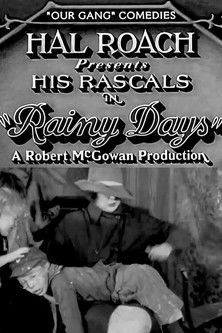
Rainy Days
Plot
Jay and Wheezer are left alone on a rainy afternoon when Mom goes out to run errands. But when their friends drop by and trash the place, the boys must struggle to clean up before Mom returns.
Get the Weekly Woke Watchlist
New and trending movies scored for woke bias, preachy messaging, and forced political themes — before you waste your evening.
No spam. One useful email per week.
Overall Series Review
Categorical Breakdown
The conflict is based entirely on the children's actions (making a mess and trying to clean it) and the looming threat of the mother's return. Characters are judged solely by their meritocratic success in restoring order to the house. There is no reliance on race or intersectional hierarchy for the plot's development.
The film’s central drama is the boys’ frantic effort to restore the domestic order of their home before the mother discovers the chaos. The narrative thus values and reinforces the institution of the home and the authority required to maintain it, directly opposing civilizational self-hatred.
The primary adult authority is 'Mom,' whose standards for domestic order drive the entire plot. Her role as the figure who upholds responsibility is celebrated, even feared. The boys are depicted as bumbling and irresponsible, but this is a classic comedic trope about children, not a systematic attack or emasculation of the male gender. Motherhood is the source of moral accountability.
The narrative is strictly focused on a traditional, pre-sexual, nuclear family context: a mother and her young children. The themes of alternative sexualities, gender ideology, or the deconstruction of the nuclear family are completely absent from this domestic comedy short.
The movie does not engage with religious themes. However, it establishes an objective moral truth and a higher, unchallengeable law (the mother's standard of cleanliness) that must be obeyed, aligning with the principle of Transcendent Morality over moral relativism. Disobedience leads directly to justified negative consequences.
Get the Weekly Woke Watchlist
New and trending movies scored for woke bias, preachy messaging, and forced political themes — before you waste your evening.
No spam. One useful email per week.