Tomie
Plot
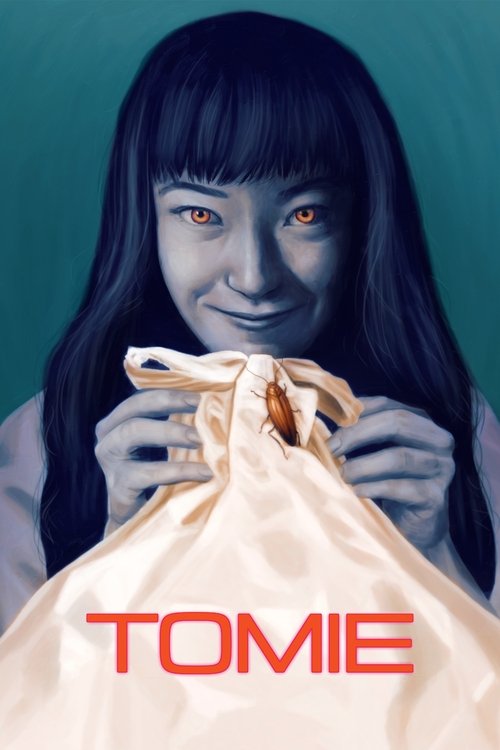
Following some trauma in her past that has since been repressed, a young woman is trying to recover her memories with the help of a psychiatrist. During her hypnosis sessions, she repeats the name "Tomie" but is unable to recall where she knows it from. Meanwhile, a police detective is investigating a string of brutal murders, where he also runs across the name "Tomie." How are the two connected?
Get the Weekly Woke Watchlist
New and trending movies scored for woke bias, preachy messaging, and forced political themes — before you waste your evening.
No spam. One useful email per week.
Overall Series Review
Categorical Breakdown
The movie is a Japanese production set in Japan, with an entirely Japanese cast. The narrative focus is on supernatural horror, personal trauma, and the corrosive effects of obsession. Race and 'whiteness' are not a part of the conflict, and there is no attempt to force diversity or use an intersectional lens.
The film focuses on a localized, internal horror tied to a supernatural entity within Japanese society. There is no critique, hostility, or lecturing aimed at 'Western civilization,' 'one's own home' (Japan), or ancestors. The film is rooted in genre tropes of J-Horror.
Tomie, the central figure, is a destructive female entity, a succubus-like monster, rather than a positive 'Girl Boss' model. She is not a 'Mary Sue,' as her perfection causes her own repeated brutal murder. Men are consistently depicted as easily manipulated and driven to insanity and murder by her supernatural allure, which suggests a degree of male incompetence in the face of feminine power. However, this dynamic is driven by a monster's curse, not a modern political argument, keeping the score moderate.
The primary dynamic is the supernatural seduction of men and the resulting, intense jealousy in women. The narrative adheres to a normative structure, centering on male-female pairing and a love-triangle dynamic, even if that dynamic leads to madness and death. There is no overt focus on sexual ideology, gender theory, or the deconstruction of the nuclear family.
The core conflict is supernatural horror, mystery, and psychology. The film does not contain any anti-Christian rhetoric or commentary on traditional religion. The horror is metaphysical and focused on the destructive nature of obsession and immortality, not an attack on faith or objective morality.
Get the Weekly Woke Watchlist
New and trending movies scored for woke bias, preachy messaging, and forced political themes — before you waste your evening.
No spam. One useful email per week.