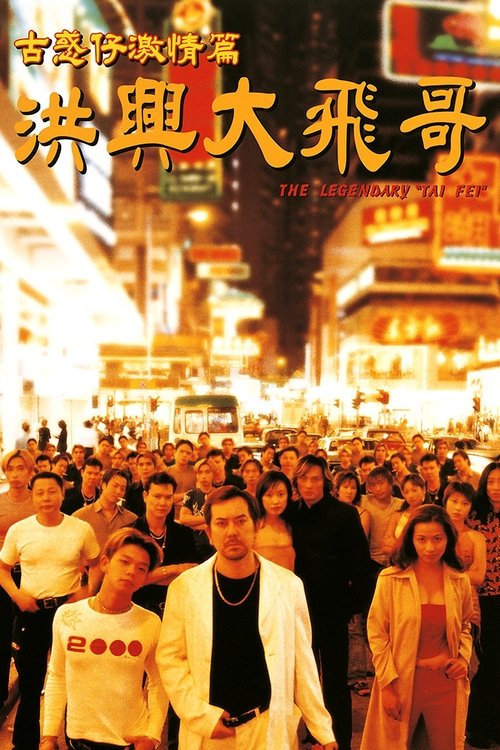
The Legendary Tai Fei
Plot
Tai Fei discovers he has a son, and soon realizes that he is a triad member involved in the Tung Sing gang which deals in narcotics.
Get the Weekly Woke Watchlist
New and trending movies scored for woke bias, preachy messaging, and forced political themes — before you waste your evening.
No spam. One useful email per week.
Overall Series Review
Categorical Breakdown
The casting is historically and culturally authentic to the Hong Kong setting and its ethnic composition. Character standing is determined by individual merit and rank within the Triad hierarchy. The conflict is internal to the local criminal underworld, with no reliance on race or intersectional characteristics to drive the plot or vilify any group.
The narrative is hyper-focused on the specific internal dynamics of the Hong Kong criminal society. There is no hostility toward the broader Chinese culture, nor does the film demonize the local heritage. It does not introduce a 'Noble Savage' or frame other cultures as spiritually superior; it is a crime drama contained within its own cultural context.
The core of the dramatic conflict centers on a man accepting his unexpected role as a father, emphasizing a traditional masculine responsibility. The movie’s central emotional theme is the importance of the male-led family unit. The story does not feature a 'Girl Boss' trope, nor does it contain any messaging that suggests motherhood is a burden or that men are inherently incompetent.
The entire dramatic premise is a result of a past male-female pairing and the subsequent traditional family unit—the father and the son. There is no presence of alternative sexual ideologies, deconstruction of the nuclear family structure, or any lecturing on gender theory within the plot.
The movie operates primarily in a secular space inherent to the crime genre, focusing on a code of criminal honor, loyalty, and betrayal. While the characters operate outside of conventional moral law, the film does not actively vilify traditional religion, nor does it present moral subjectivity as a central theme. The conflict is rooted in a personal moral choice rather than anti-theistic power dynamics.
Get the Weekly Woke Watchlist
New and trending movies scored for woke bias, preachy messaging, and forced political themes — before you waste your evening.
No spam. One useful email per week.