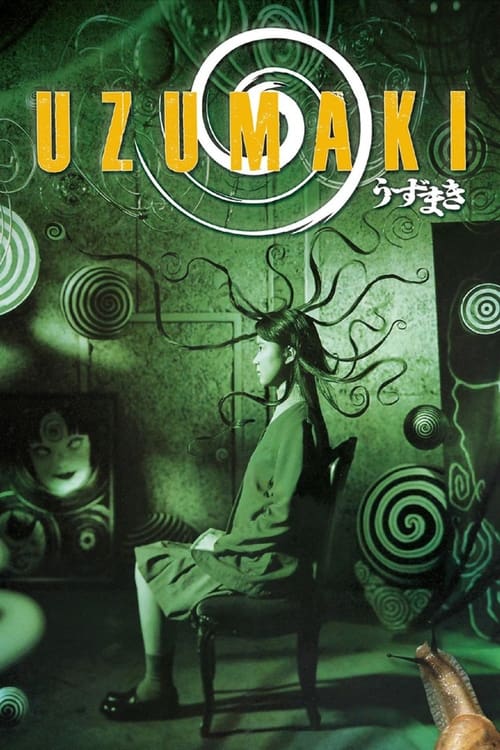
Uzumaki
Plot
The inhabitants of a small Japanese town become increasingly obsessed with and tormented by spirals.
Get the Weekly Woke Watchlist
New and trending movies scored for woke bias, preachy messaging, and forced political themes — before you waste your evening.
No spam. One useful email per week.
Overall Series Review
Categorical Breakdown
The film centers on an existential, non-ideological cosmic curse that affects every person in the town regardless of their social standing. The cast is ethnically homogeneous and Japanese, reflecting the source material’s setting. The narrative does not contain any commentary on race, intersectionality, or systemic power structures. Characters are defined solely by their reaction to the supernatural horror.
The central conflict is a defense of the community and the human form against a literal, external force of chaos (the spiral). The institution of the small town and the family unit are portrayed as victims that are being physically and mentally corrupted by the curse. The film exhibits no hostility toward Japanese culture or history; the sense of home is a protective sanctuary that is tragically destroyed by a purely abstract, malignant presence.
The main protagonist, Kirie, is a young woman, but she is generally depicted as a reactive observer who witnesses the madness unfolding around her. Her boyfriend, Shuichi, is the first to recognize the danger and urges immediate flight from the town. Both male and female figures, including family members, are equally subject to the horrific transformations and obsessions of the curse. The story does not feature a 'Girl Boss' trope or an anti-natalist message, as the focus is on escaping immediate physical destruction.
The story strictly adheres to a normative structure, focusing on the male-female pairing of Kirie and Shuichi and the breakdown of traditional family units as a consequence of the curse. Sexual identity is not a factor in the plot, the characters' motivations, or the theme. There is no deconstruction of the nuclear family as an ideological critique, nor is there any presence of gender theory lecturing.
The film’s horror is cosmic and Lovecraftian, substituting an indifferent, vast, and incomprehensible power (the spiral) for a traditional spiritual one. The narrative does not actively vilify organized religion, specifically Christianity, as it is not a factor in the rural Japanese setting. The terrifying nature of the spiral suggests an amoral, transcendent pattern over a higher moral law, but this is a genre convention for existential horror, not anti-theistic activism.
Get the Weekly Woke Watchlist
New and trending movies scored for woke bias, preachy messaging, and forced political themes — before you waste your evening.
No spam. One useful email per week.