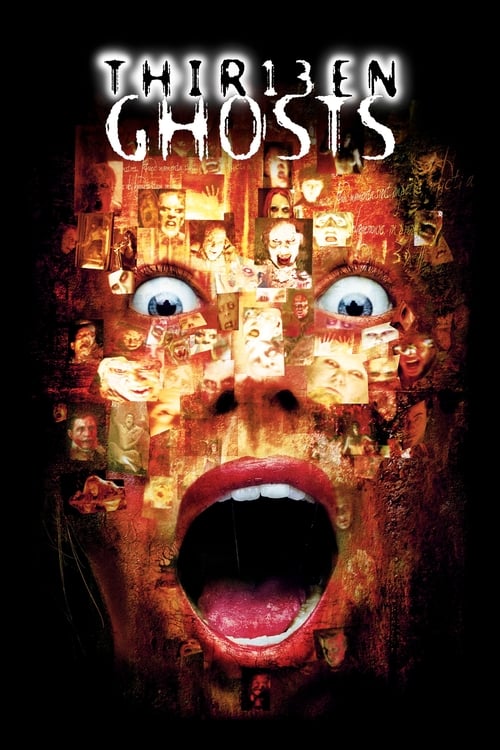
Thir13en Ghosts
Plot
Arthur and his two children inherit his uncle's estate: a glass house that serves as a prison to twelve ghosts. When the family, accompanied by a nanny and an attorney, enter the house they find themselves trapped inside an evil machine 'designed by the Devil and powered by the dead' to open the Eye of Hell. Aided by a ghost hunter and his rival, a ghost rights activist out to set the ghosts free, the group must do what they can to get out of the house alive.
Get the Weekly Woke Watchlist
New and trending movies scored for woke bias, preachy messaging, and forced political themes — before you waste your evening.
No spam. One useful email per week.
Overall Series Review
Categorical Breakdown
The narrative does not center on an intersectional hierarchy, with characters being judged by their actions against an objective evil. The core protagonist is a white male driven by paternal love, standing against the wealthy white male villain, Cyrus Kriticos. However, one of the ghosts, The Hammer, is an African-American man whose backstory is rooted in racial violence, as he was lynched and brutalized by 'racist townsfolk.' This insertion of historical systemic racial oppression is a clear example of the intersectional lens being used, though it is confined to a ghost’s backstory and does not dominate the main plot.
The central threat is a complex, glass-house machine designed by the Devil and an ancient astronomer, built by an occult-obsessed Western capitalist (Cyrus Kriticos). This is a critique of a specific form of occult greed and forbidden knowledge, not a broad vilification of Western civilization or its core values. The protagonist's successful resistance to the evil machine is motivated by defending his family and home, and his climactic act is one of ultimate self-sacrifice, viewing liberty and family as shields against chaos.
The core of the story is the widowed father, Arthur, who is the protective emotional center of the family. He is not a physical alpha, but his paternal love is the most potent force in the movie. The female characters—the nanny Maggie and the ghost liberator Kalina—are intelligent, resourceful, and active. Maggie is street-smart and the first to believe the warnings, while Kalina possesses the academic knowledge needed to understand the threat. They are competent and complementary to the male characters without relying on 'Girl Boss' tropes or emasculating the protagonist.
The movie operates on a normative structure, with the main hero motivated by protecting his children and defending the memory of his deceased wife, affirming the nuclear family. The focus on sexuality is limited to the dark backstories of two ghosts: The Jackal, a serial sexual predator and misogynist, and The Angry Princess, a woman who committed suicide over body image issues. Sexuality is presented as a source of tragedy or perversion, not as a political identity, and gender ideology is absent from the plot.
The entire plot revolves around a literal, objective spiritual battle. The machine is the 'Eye of Hell,' created by the Devil and powered by evil spirits. The main conflict is a moral one, where an act of pure, sacrificial love is the only force capable of defeating the literal demonic ritual. This narrative explicitly affirms a transcendent moral law and objective spiritual reality that opposes a supernatural evil, making no attempt to frame traditional religion as the root of evil.
Get the Weekly Woke Watchlist
New and trending movies scored for woke bias, preachy messaging, and forced political themes — before you waste your evening.
No spam. One useful email per week.