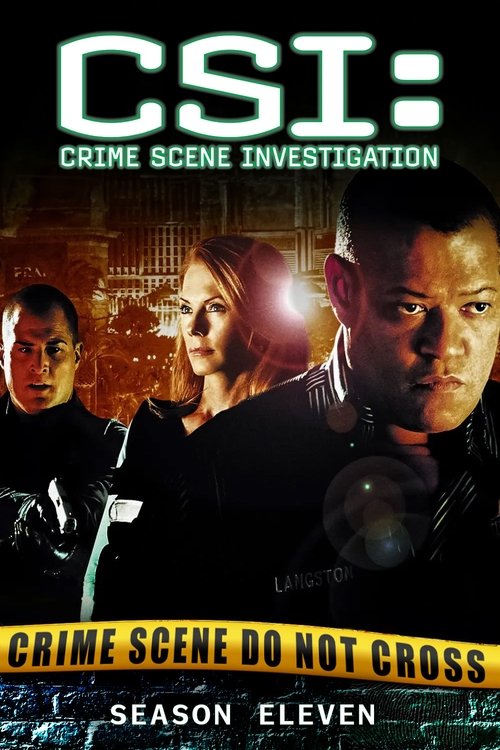
CSI: Crime Scene Investigation
Season 11 Analysis
Season Overview
Despite injuries in the ranks, the CSI unit tackles a new slate of cases ranging from an urban shark attack to a deadly fugitive with a chilling agenda.
Season Review
Categorical Breakdown
Characters are defined by their professional roles, experience, and internal struggles, such as Dr. Langston confronting his own 'genetic makeup and natural predisposition to crime,' which is a philosophical concern about human nature, not a lecture on systemic oppression or race-based guilt. The ensemble cast is diverse, including Black, White, and female leads, all operating based on individual merit and expertise. There is no evidence of vilification of 'whiteness' or forced insertion of political commentary.
The narrative operates under the mantra that 'the evidence never lies' and that 'good and truth triumph over evil,' which reinforces transcendent moral values. The show routinely depicts the protagonists as a shield against chaos, upholding the law against criminal pathology. While episodes sometimes feature corrupt police, lawyers, or politicians, this is framed as individual or institutional failure against the standard of American justice, not a sign that the home culture is fundamentally corrupt or racist.
Female leads like Catherine Willows and Sara Sidle are highly competent and essential to the unit, but they are not portrayed as 'Mary Sue' figures whose perfection comes at the expense of male competence. Male characters like Nick Stokes and Greg Sanders also demonstrate skill. One case features a teen suicide where the doctors perform an emergency C-section to save the baby's life, which is a fundamentally anti-anti-natalist plot point. Gender roles are complementarian in the professional sense, judging everyone on their forensic skill.
The season contains no explicit storylines centering on modern queer theory or gender ideology, which is typical for a 2010 procedural. The score is marginally higher than 1 due to the franchise's prior track record of using alternative sexualities and transgender identity as sensationalist plot twists, often involving murderers who are 'driven to kill due to their sexuality.' This is a form of pathologizing, although it is not the same as promoting contemporary sexual ideology.
The core of the series is a strict adherence to forensic science and the pursuit of objective truth found in physical evidence. This scientific secularism creates a spiritual vacuum by simply omitting religious faith from the main characters' lives, but it avoids overt hostility. No traditional religious characters are depicted as villains or bigots; the morality is driven by the immutable facts of a crime rather than subjective 'power dynamics,' acknowledging a higher, objective truth: the truth of the evidence.