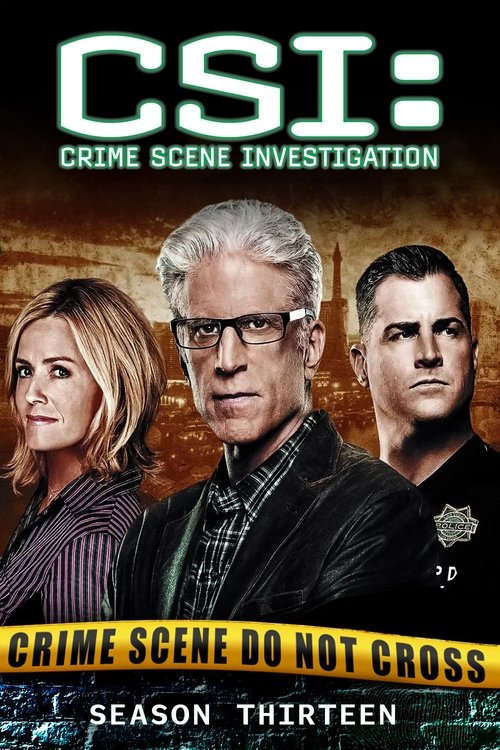
CSI: Crime Scene Investigation
Season 13 Analysis
Season Overview
In the 13th season of this venerable crime drama, the CSI team of the Las Vegas Police continues to crack difficult and often bizarre criminal cases.
Season Review
Categorical Breakdown
Characters are defined by their professional competency as forensic scientists. The plot relies on the investigation of evidence and scientific process, maintaining a universal meritocratic focus. Storylines are not driven by lectures on privilege or systemic oppression. Casting reflects the colorblind approach of a 2012 procedural drama.
The series is entirely framed within the context of a US law enforcement agency, the Las Vegas Crime Lab. The work of the institution is consistently shown as necessary and positive in maintaining social order. There is no narrative hostility directed at Western civilization, home culture, or ancestors. Institutions are viewed as a necessary shield against chaos.
Female characters like Julie Finlay and Sara Sidle are highly intelligent, competent, and authoritative leaders in the male-dominated field of forensic science. This qualifies them as 'Girl Boss' types. However, male leads are also highly competent and not consistently depicted as bumbling or toxic. Personal storylines include traditional concerns like long-distance marriage and pre-wedding anxiety, which counters the trope that career is the only fulfillment.
The show features case-of-the-week plots involving alternative sexualities. The episode 'Strip Maul' includes a transgender character who is depicted using outdated stereotypes, including a 'man in a dress' caricature, and is incorrectly labeled as a 'transvestite' within the narrative. While this reflects social insensitivity, the show does not center on sexual identity as the most important trait or explicitly frame the nuclear family as oppressive, which keeps the score moderate-high for the era.
The core of the narrative is scientific and empirical, which naturally excludes faith from the investigative process, but this is a neutral stance, not anti-theistic. Religion is occasionally featured as a context for a crime, such as a spiritual retreat, but traditional faith is not generally portrayed as the root of evil, and Christian characters are not consistently depicted as bigots or villains. Objective truth is upheld by the forensic evidence.