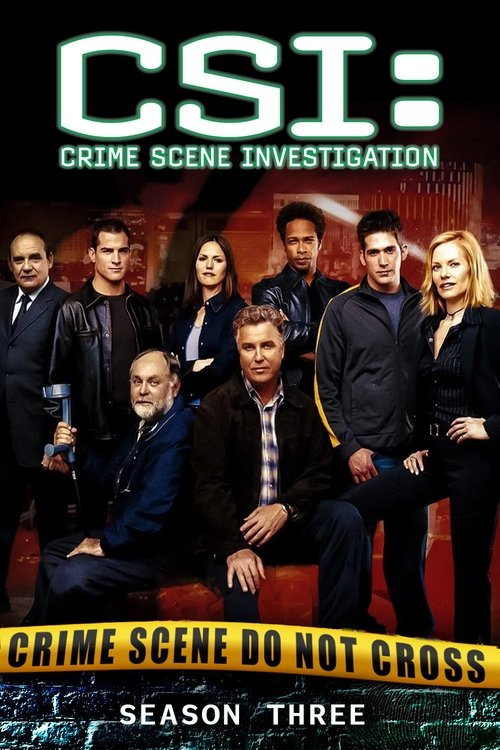
CSI: Crime Scene Investigation
Season 3 Analysis
Season Overview
No specific overview for this season.
Season Review
Categorical Breakdown
The narrative places the pursuit of evidence and scientific merit above all else; the professional competency of the CSIs is the core focus. While one episode does deal with a mob killing that is initially suspected to be racially motivated, the narrative treats this as a crime to be solved, not a vehicle for a lecture on systemic oppression. Casting is diverse for the time, and characters are judged by their professional skill.
The series focuses on uncovering the brutal crimes within American society, but this is a standard procedural approach, not an indictment of Western civilization itself. The institutions of the CSI lab and the police are depicted as necessary, albeit flawed, shields against chaos, and the heroes are working to uphold order and justice. There is no element of civilizational self-hatred or demonization of ancestors.
Catherine Willows is a powerful female lead, an assistant supervisor who operates competently in a male-dominated field. However, she is also deeply invested in her role as a mother, which provides the dramatic grounding for one of the season's main storylines. Furthermore, she is shown to be fallible and faces professional consequences for a serious mistake, which avoids the 'Girl Boss' or 'Mary Sue' trope that defines modern hyper-feminist narratives. Sara Sidle is also a competent scientist whose personal trauma is explored.
The season adheres to a normative structure where the traditional male-female pairing is the unspoken standard among the main cast. Elements of alternative sexuality and subcultures (such as the S&M world of Lady Heather) appear as subjects of criminal investigation, but the plots do not center on identity as a virtue, nor do they promote contemporary gender ideology. The presentation of these subcultures is often linked to the crime itself, not offered as a model for society.
The show is predominantly focused on the material world and objective science, creating a spiritual vacuum by exclusion rather than active hostility. The central theme of forensic science itself acts as a secular form of transcendent, objective truth—the evidence speaks. There are no overt plot points that demonize traditional religion or portray Christian characters as villains or bigots; religion is simply absent from the forensic-focused moral landscape.