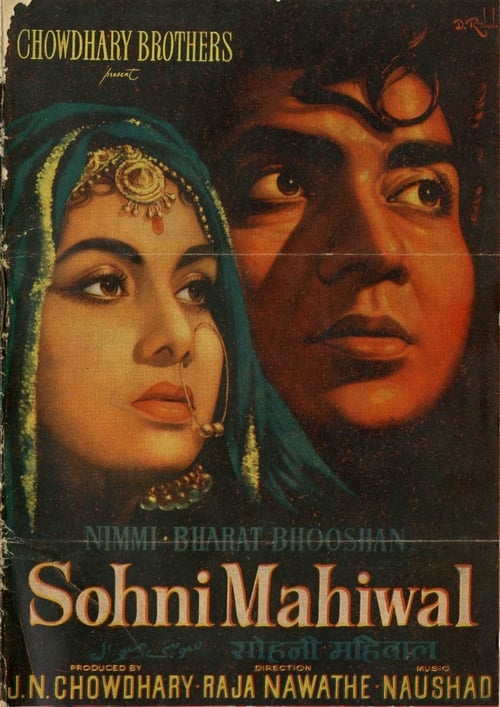
Sohni Mahiwal
Plot
Ijjat Beg comes to India with his caravan and settles in a town in Gujrat. Here, he falls in love with Sohni, who owns a shop of metal pots.
Get the Weekly Woke Watchlist
New and trending movies scored for woke bias, preachy messaging, and forced political themes — before you waste your evening.
No spam. One useful email per week.
Overall Series Review
Categorical Breakdown
The conflict is based on social and class prejudice against an outsider (Mahiwal, a trader from Bukhara) and a local (Sohni, a potter's daughter), a traditional social barrier. The story champions their universal love, which is judged by the content of their souls, overriding the prejudice of class and community standing. The narrative does not contain vilification of a 'whiteness' construct or forced diversity.
The hostility is directed toward a specific, restrictive aspect of the home culture—rigid social norms regarding class, caste, and forced marriage. The tale critiques the institutions that restrict love but does not demonize the entire heritage or civilization. The critique is internal and does not involve the 'Noble Savage' trope or hostility toward Western civilization.
Sohni is depicted as a determined heroine who defies her forced marriage and the traditional family structure, acting with great agency by swimming the river nightly to meet her love. This rejection of the arranged, traditional role is a strong independent action. Her chief antagonists are other women (sister-in-law and mother-in-law) who enforce the patriarchal system. The story punishes her transgression with tragedy, which is not a celebration of the 'Girl Boss' trope but a dramatic consequence of defying cultural norms.
The narrative is a traditional, heterosexual tragic romance. The structure is based on the normative male-female pairing, and the central conflict is a challenge to the traditional path of marriage. The story does not contain alternative sexual ideologies, deconstruction of the nuclear family through a modern lens, or lecturing on gender theory.
The movie's themes emphasize a transcendent, spiritual power of true love that is beyond social and material concerns. One message in the film states that love is reality and God is one. The focus is on a higher moral law of passion and sacrifice, with faith acting as a source of strength, not a root of evil.
Get the Weekly Woke Watchlist
New and trending movies scored for woke bias, preachy messaging, and forced political themes — before you waste your evening.
No spam. One useful email per week.