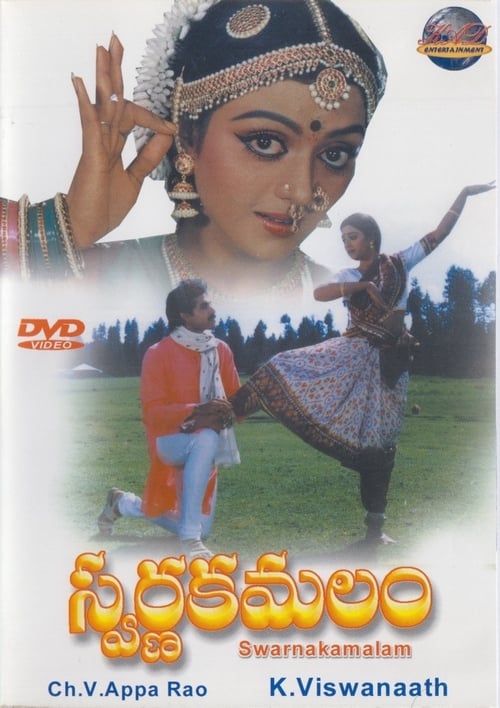
Swarnakamalam
Plot
Meenakshi is a disillusioned classical dancer. With the support of her neighbor Chandram, a painter who admires her talent, she begins a journey to appreciate and celebrate her art.
Get the Weekly Woke Watchlist
New and trending movies scored for woke bias, preachy messaging, and forced political themes — before you waste your evening.
No spam. One useful email per week.
Overall Series Review
Categorical Breakdown
The plot focuses entirely on the internal conflict of an artist and the value of her art form versus economic realities, not on intersectional identity or power hierarchies. Characters are defined by their merit and devotion to tradition or their embracing of materialistic modernity, adhering to a universal meritocratic view.
The central conflict praises the native, traditional culture (classical dance, Indian roots) as a source of spiritual enrichment and meaning. The narrative explicitly frames the 'growing influence of western civilization' and 'modern way of living' as a negative force that causes the cultural art to fade and the family to face poverty, serving as a powerful 'Chesterton’s Fence' defense of ancestral values.
The female protagonist is initially highly skilled but 'disillusioned' and 'bitter,' making her character imperfect and in need of growth. The male lead is a vital catalyst who guides her back to her devotion to art through patient admiration and support. The arc culminates in the heroine choosing a traditional romantic union in her home country over a career opportunity abroad, prioritizing a traditional complementary relationship structure over a 'Girl Boss' career fulfillment model.
The story follows a normative structure, centered on the male-female pairing and eventual heterosexual union between the main characters. The film contains no content, discussion, or lecturing regarding alternative sexual identities, gender theory, or the deconstruction of the nuclear family.
The core subject is Kuchipudi, a Hindu classical dance form that is inherently spiritual and devotional. The film features songs shot at a Siva Temple and treats the traditional art as a source of spiritual truth, suggesting a transcendent moral order rooted in tradition and faith, rather than depicting religion as a source of evil.
Get the Weekly Woke Watchlist
New and trending movies scored for woke bias, preachy messaging, and forced political themes — before you waste your evening.
No spam. One useful email per week.