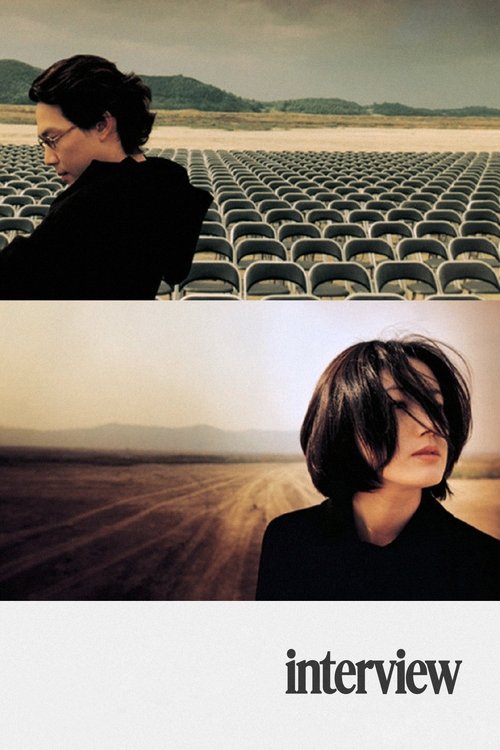
Interview
Plot
A story of a filmmaker who falls in love with a woman he interviews for his film. The film presents the evolution of a relationship which shifts from the objective to the subjective, and from lies to truth.
Get the Weekly Woke Watchlist
New and trending movies scored for woke bias, preachy messaging, and forced political themes — before you waste your evening.
No spam. One useful email per week.
Overall Series Review
Categorical Breakdown
The film is a South Korean production and centers on a simple romantic relationship between two ethnically Korean characters. The narrative focuses on individual emotional struggle and honesty, not on an intersectional hierarchy, racial politics, or the vilification of any specific demographic group. Casting is naturally color-coherent with the setting, reflecting meritocracy in the context of the story's world.
As a South Korean film, the narrative does not engage in hostility toward Western civilization, its home, or its ancestors, which is the definition of this category. The plot's intimate scale focuses on personal issues of love and lies, making civilizational self-hatred irrelevant to the story.
The female protagonist's arc is about reconciling with her past and moving from lies to truth, a personal journey of self-acceptance. The relationship dynamic involves two complementary individuals whose bond is built upon mutual discovery. There are no elements of the 'Girl Boss' trope, emasculation of the male lead, or anti-natalist/anti-family messaging; the dynamic centers on the vital, traditional development of a heterosexual couple.
The movie is a straightforward heterosexual romance between a male filmmaker and a female subject. The plot contains no centering of alternative sexualities, deconstruction of the nuclear family, or lecturing on gender theory. The structure is entirely normative and focuses on a traditional male-female pairing as the basis for the drama.
The romantic drama does not feature any religious themes or content. There is no hostility directed toward Christianity or any other traditional faith. The moral conflicts revolve around personal truthfulness and deception, acknowledging an objective emotional truth rather than promoting moral relativism.
Get the Weekly Woke Watchlist
New and trending movies scored for woke bias, preachy messaging, and forced political themes — before you waste your evening.
No spam. One useful email per week.