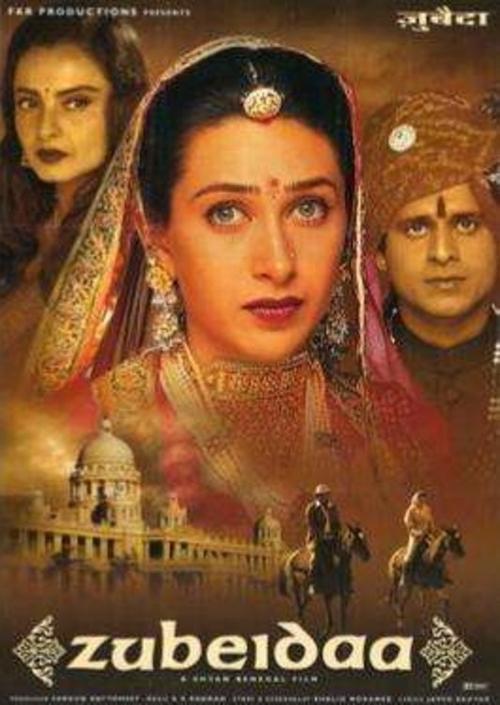
Zubeidaa
Plot
Zubeidaa, an aspiring Muslim actress, marries a Hindu prince to become his second wife. Her tumultuous relationship with her husband, and her inner demons lead her to a decision which has fatal consequences for them all.
Get the Weekly Woke Watchlist
New and trending movies scored for woke bias, preachy messaging, and forced political themes — before you waste your evening.
No spam. One useful email per week.
Overall Series Review
Categorical Breakdown
The plot's entire engine relies on the intersectional conflict of Zubeidaa’s identity markers: a Muslim woman, a professional actress, and a commoner who marries into a conservative Hindu royal family. Her tragedy is rooted in these immutable characteristics and social class. The narrative positions the entrenched royal and patriarchal systems as the source of her oppression, not as a lecture on 'whiteness' but as a clear-cut hierarchy of identity in an Indian context.
The traditional institutions of the protagonist's life—her family and the royal court—are framed as restrictive forces that crush the individual spirit. Her dominating father and the stifling royal protocol are the primary antagonists, suggesting that the film deconstructs the heritage and established institutions as fundamentally hostile to personal liberty and a free-spirited life.
The core thematic drive is the self-actualization of a 'truly modern woman' who is defiant and wilful against a purely toxic, male-dominated system. Zubeidaa is an ambitious actress whose potential is thwarted by a dominating father and a husband who 'fails to understand her spirit.' The film elevates the female lead's pursuit of freedom above all else and clearly positions the men around her and the patriarchal court system as toxic and constraining.
The narrative centers on traditional, albeit polygamous, male-female marriage and family dynamics without introducing alternative sexual ideologies. No characters or plot points are dedicated to advancing a queer theory lens or deconstructing the nuclear family outside the context of a dysfunctional dynastic marriage.
The conflict is centered on social and cultural restrictions, particularly those surrounding a controversial interfaith marriage, rather than a philosophical attack on religious faith itself. The film critiques the restrictive customs and traditions of the royal and patriarchal establishments, but it does not frame religion as the root of all evil or promote moral relativism over a transcendent moral law.
Get the Weekly Woke Watchlist
New and trending movies scored for woke bias, preachy messaging, and forced political themes — before you waste your evening.
No spam. One useful email per week.