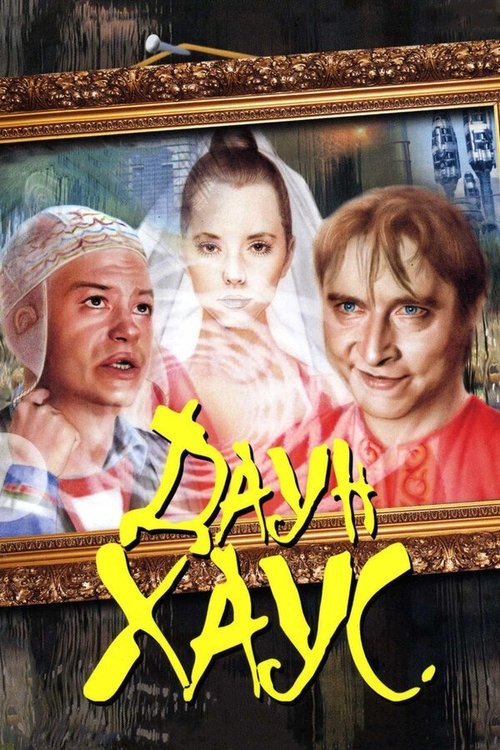
Down House
Plot
Programmer Prince Myshkin returns to his historical homeland from Switzerland, where he was undergoing treatment in a psychiatric clinic. On the bus, the prince meets businessman Parfen Rogozhin, who is suffering from lovesickness for Nastasya Filippovna.
Get the Weekly Woke Watchlist
New and trending movies scored for woke bias, preachy messaging, and forced political themes — before you waste your evening.
No spam. One useful email per week.
Overall Series Review
Categorical Breakdown
The film focuses on class, wealth, and moral standing within a homogenous Russian society. Character conflict stems entirely from personal passions, greed, and mental illness, not from race or intersectional hierarchy. The cast is ethnically authentic to the setting, reflecting genuine colorblind casting in a non-Western context.
The narrative is a strong internal satire of the immediate 'New Russian' home culture, showcasing its corruption, materialism, and moral decay through absurd comedy. This is a critique of a localized, degenerate social system, which is a traditional moral critique, not a generalized self-hatred of a Western civilization or its deep ancestry.
The female characters, Nastasya Filippovna and Aglaya Yepanchina, are central figures in a romantic tragedy, driven by passion, jealousy, and social status. Nastasya's 'fallen' status and her role as a figure of destructive allure are complex and tragic. The narrative uses traditional dynamics of love and male-female conflict, and does not feature 'Girl Boss' tropes, anti-natalism, or ideological emasculation.
The core plot is a traditional love triangle/quadrangle involving male and female pairings. There is no presence of centering alternative sexualities, deconstructing the nuclear family, or lecturing on gender theory. Sexual themes are traditional and dramatic, revolving around heterosexual desire, exploitation, and marriage.
The film is an adaptation of a deeply spiritual Dostoevsky novel, with the protagonist, Myshkin, being an innocent, moral force. The satire on Russian society primarily critiques its moral vacuum and materialism. This functions as an argument *for* transcendent morality and goodness in a depraved world, rather than an attack on religion. No Christian figures are depicted as villains or bigots.
Get the Weekly Woke Watchlist
New and trending movies scored for woke bias, preachy messaging, and forced political themes — before you waste your evening.
No spam. One useful email per week.