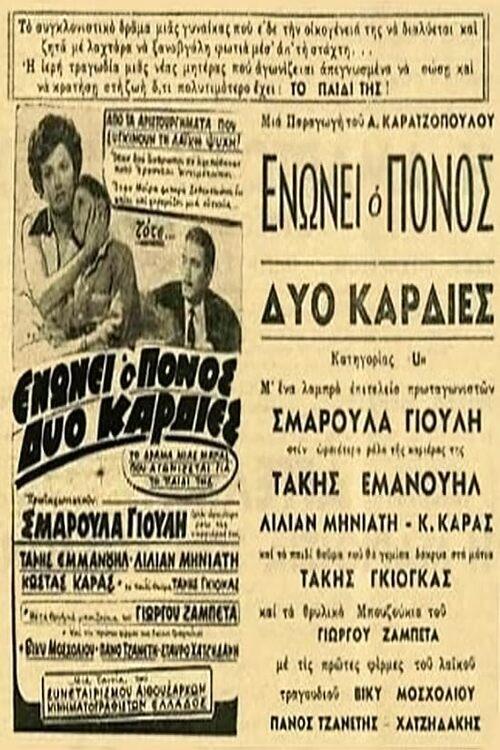
Ενώνει ο πόνος δυο καρδιές
Plot
Get the Weekly Woke Watchlist
New and trending movies scored for woke bias, preachy messaging, and forced political themes — before you waste your evening.
No spam. One useful email per week.
Overall Series Review
Categorical Breakdown
The characters are defined by their roles as husband and wife and their universal human flaws of self-absorption and neglect. The story is a personal drama of marriage failure and redemption, not a critique based on race, class, or any intersectional hierarchy. Casting is historically and culturally authentic to 1960s Greece.
The conflict originates from internal family failures (egotism, neglect) and not a vilification of Greek culture or Western civilization. The core Western institution of the family is the central subject of the drama, confirming its enduring importance as a social unit, even if the individual family unit in the story is flawed.
The female lead is portrayed as a miserable, neglected wife whose primary concern is her family life and child, not a perfect, instantly competent 'Girl Boss.' The man is depicted as an egotistical male who prioritizes his career over his spouse and child. The narrative uses the shared tragedy of losing their child to critique the husband's professional obsession, reaffirming the value of the marital and parental bond over careerism.
The entire plot focuses exclusively on the breakdown and repair of a traditional heterosexual marriage. The nuclear family structure is the standard and the central emotional driver of the film's conflict and resolution. There is no mention or centering of alternative sexualities or gender ideology.
The story is a purely secular, human-focused emotional melodrama. The moral resolution is achieved through a shared, tragic event (the death of the child) that forces a change in the spouses' subjective emotional states. There is no presence of traditional religion as a source of strength or as a target for hostility, resulting in a neutral moral vacuum.
Get the Weekly Woke Watchlist
New and trending movies scored for woke bias, preachy messaging, and forced political themes — before you waste your evening.
No spam. One useful email per week.