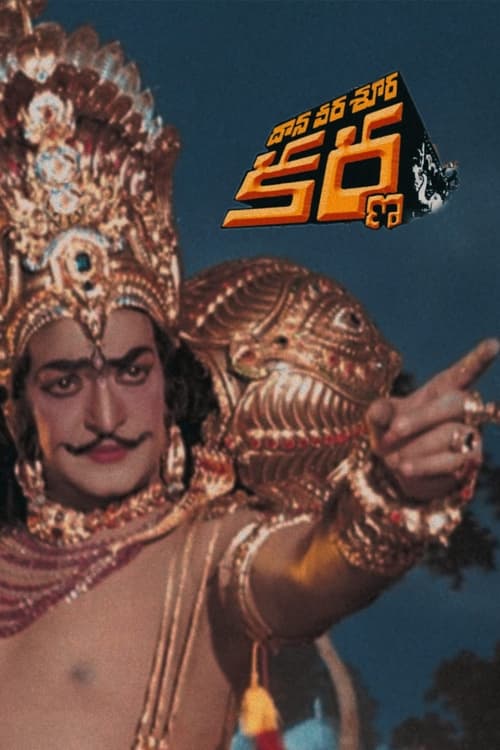
Daana Veera Soora Karna
Plot
A retelling of Mahabharata through the perspectives of KARNA and DURYODHANA. The film uses dialogue and poetry written in Classical Telugu/ Grandhika Basha.
Get the Weekly Woke Watchlist
New and trending movies scored for woke bias, preachy messaging, and forced political themes — before you waste your evening.
No spam. One useful email per week.
Overall Series Review
Categorical Breakdown
The plot directly criticizes the systemic hierarchy of birthright and caste, arguing for individual merit and skill over lineage. Duryodhana challenges the societal obsession with caste, championing Karna's competence over his low-born status. The narrative works to dismantle the power of immutable characteristics in favor of universal meritocracy.
The film is a foundational work of Hindu mythological cinema, celebrating a key epic of Indian civilization and utilizing the classical form of the Telugu language. It immerses the viewer in its home culture and treats its ancient institutions and ancestors (kings, gods, gurus) with grandiosity and profound respect, maintaining a sense of historical reverence.
Female characters like Kunti and Draupadi hold pivotal roles, but their arcs are defined by their status as mothers, wives, and queens within a complementarian structure. The story examines the consequences of both male and female choices within this framework. There is no presence of the 'Girl Boss' trope, anti-natalism, or emasculation of the core masculine figures.
The story is an adaptation of an ancient Hindu epic from 1977, focusing entirely on traditional marital, dynastic, and familial relationships. Sexual identity is not a plot element. The normative structure of the male-female nuclear family is the standard, and no form of gender ideology or queer theory is lectured to the audience.
The narrative is based on a foundational religious text and features Lord Krishna as a central divine guide. Moral law is transcendent and objective (Dharma). Faith and divine duty are presented as the source of strength and the catalyst for the central moral conflicts, not as the root of evil or a subjective power dynamic.
Get the Weekly Woke Watchlist
New and trending movies scored for woke bias, preachy messaging, and forced political themes — before you waste your evening.
No spam. One useful email per week.