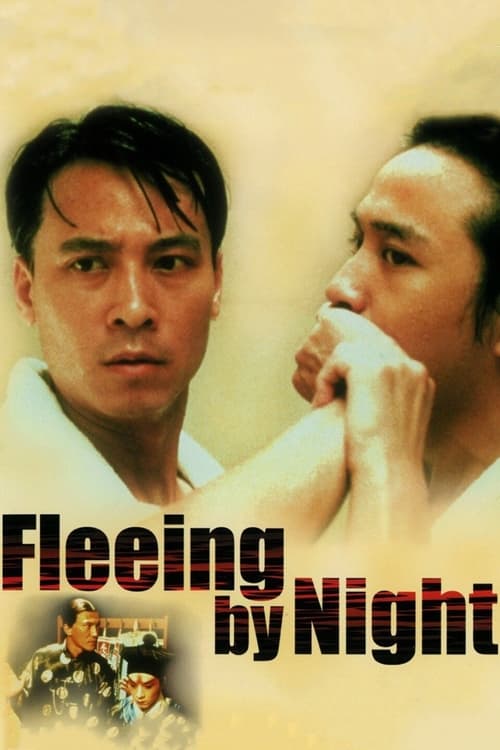
Fleeing by Night
Plot
Set in China in the 1930s, the film is about the unsettling relationship between three characters, each involved with a performance of the opera Fleeing by Night in a local theatre.
Get the Weekly Woke Watchlist
New and trending movies scored for woke bias, preachy messaging, and forced political themes — before you waste your evening.
No spam. One useful email per week.
Overall Series Review
Categorical Breakdown
The movie is set in 1930s China and features entirely Chinese characters. The narrative focuses on the internal social and emotional conflicts within that culture. There is no representation of 'whiteness' to be vilified, no 'race-swapping,' and the plot does not exist to lecture on intersectional hierarchy based on race or privilege in a Western context. Character judgment is based on individual actions and their complex emotional states.
The film is critical of specific Chinese societal customs, such as arranged marriage and the exploitation and repression of opera performers and non-normative relationships. This is an internal cultural critique, not hostility toward Western civilization. It documents a period of societal fluctuation and political chaos (Republican China and the Japanese occupation), which is a historical observation, not civilizational self-hatred of the West. The American-educated character is portrayed sympathetically and brings Western music (the cello) into the narrative.
The female lead, Ing'er, is central to the emotional story but is portrayed as a victim of her circumstances: an arranged marriage and her fiancé's hidden life. She is a traditional figure navigating a painful emotional reality. The narrative focuses on her heartbreak and humiliation, not on presenting her as a 'Mary Sue' or 'Girl Boss.' The story mourns the collapse of a potential family unit, and does not feature anti-natalist or anti-male messaging; the male characters are flawed and suffer deeply from their own social repression.
The core of the story revolves around a hidden, same-sex love affair between two male leads, Shaodung and Lin Chung. This relationship is depicted as 'forbidden' and is the catalyst for the tragedy, centering alternative sexuality and directly deconstructing the planned nuclear family unit. Furthermore, one of the male characters is involved in a transactional or exploitative relationship with a powerful older patron. While the film is a tragic drama rather than an ideological lecture, the prominence of non-normative sexuality and its role in fracturing the normative structure places the score in the high range.
The film's setting is 1930s China, and the main conflicts are cultural, emotional, and social, revolving around opera, arranged marriage, and societal repression of sexuality. Religion, specifically Christianity, is not a theme, nor are there Christian characters presented as villains. The morality is derived from social pressure and personal suffering, which results in a story focused on human tragedy rather than a critique of objective, transcendent moral law.
Get the Weekly Woke Watchlist
New and trending movies scored for woke bias, preachy messaging, and forced political themes — before you waste your evening.
No spam. One useful email per week.