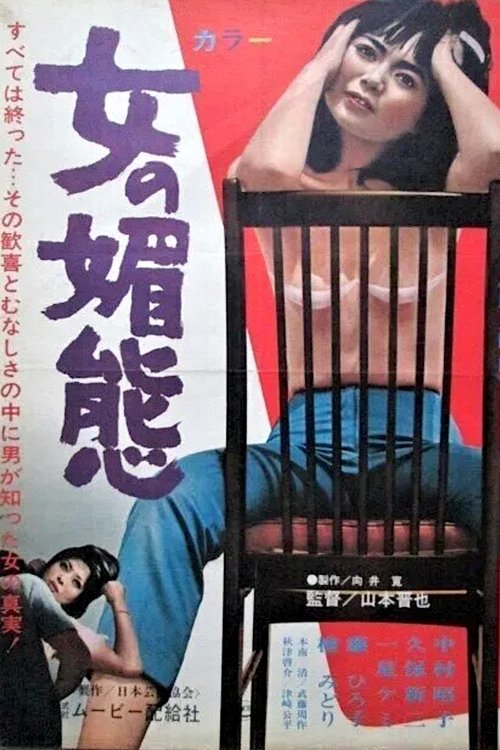
Women's Coquetry
Plot
Pink film directed by Shinya Yamamoto.
Get the Weekly Woke Watchlist
New and trending movies scored for woke bias, preachy messaging, and forced political themes — before you waste your evening.
No spam. One useful email per week.
Overall Series Review
Categorical Breakdown
The film’s setting and focus are purely Japanese. Characters are judged entirely on their personal sexual dynamics and emotional responses. The narrative includes no references to race, immutable characteristics, or intersectional hierarchy. There is no vilification of 'whiteness' or forced diversity.
The movie is a contemporary sexual drama that critiques a specific, modern relationship hang-up, not a general condemnation of Japanese society. The film does not frame its home culture as fundamentally corrupt or racist. There is no demonization of ancestors or suggestion that external cultures are morally superior.
The female protagonist's individual sexual desire and obsession with the tape is the central element of the plot. This desire is so powerful that it causes her male partner to become sexually dysfunctional and dependent on an object for his own arousal, effectively emasculating him within the central dynamic. This narrative centers the woman’s needs and problems while depicting the man as incompetent to satisfy her.
The primary focus is a heterosexual pairing dealing with a sexual fetish. The film does not center alternative sexualities, deconstruct the nuclear family as an oppressive structure, or engage in gender ideology lecturing. The sexual content is private drama, not public political ideology.
As an erotic drama, the film operates in a secular space. There is no depiction of traditional religion as a root of evil, nor are religious characters used as villains or bigots. The story’s morality is subjective to the couple's sexual experience, but this reflects the pink film genre's focus on non-traditional sexuality, not a philosophical attack on Objective Truth.
Get the Weekly Woke Watchlist
New and trending movies scored for woke bias, preachy messaging, and forced political themes — before you waste your evening.
No spam. One useful email per week.