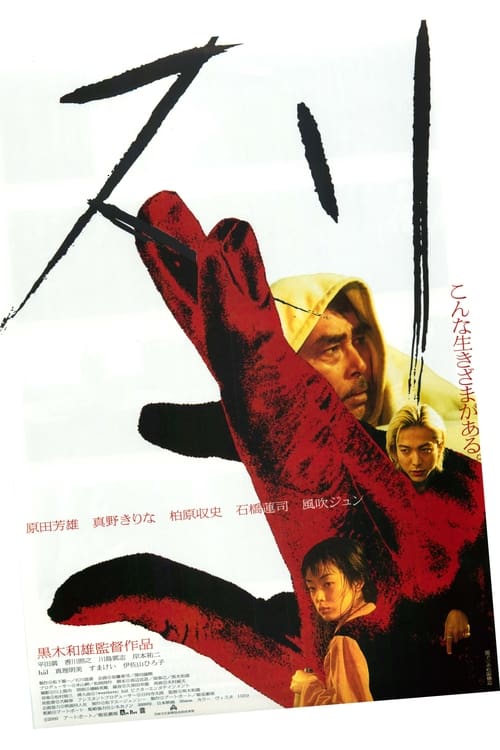
Pickpocket
Plot
Kaido is a professional pickpocket who works the Tokyo subway with his young foster-daughter, Rei: She lets herself be groped while Kaido relieves the groper of his wallet. More often than not they're observed by a middle-aged cop, who generally lets Kaido go free. Rei is unsettled when Kaido takes on a young street punk, Kazuki, as an apprentice -- with instructions to make Kaido stop drinking. Kazuki, however, would like to go into business with Rei.
Get the Weekly Woke Watchlist
New and trending movies scored for woke bias, preachy messaging, and forced political themes — before you waste your evening.
No spam. One useful email per week.
Overall Series Review
Categorical Breakdown
The narrative is focused entirely on the internal drama of a Japanese crime syndicate. Character success and failure are determined by skill, personal addiction, and interpersonal conflict, reflecting a universal meritocracy of the criminal world. Immutable characteristics like race are not a factor in the conflict or theme, and there is no vilification of a specific group.
The film focuses on the 'urban underbelly' and the desperation of those marginalized by Japanese society, which acts as a critique of the modern state’s failure to provide for its citizens. This is a pointed social critique of a contemporary problem rather than a condemnation of ancestral or fundamental Japanese culture. Institutions like family (even a non-traditional one) are treated as sources of loyalty and protection.
The female lead, Rei, is placed in a clearly exploitative and dangerous role as bait to attract gropers. This is a severe depiction of gendered exploitation within a patriarchal crime dynamic. However, Rei is not depicted as a perfect 'Girl Boss' or a flawless character. Her role and choices are complex, reflecting a stark reality of the criminal world without resorting to a simplistic 'men are toxic' lecture or anti-natalist messaging. The character serves the plot's brutal realism, not a feminist agenda.
The plot contains no discernible focus on centering alternative sexualities or gender ideology. The non-traditional family structure of a foster father and daughter is a matter of circumstance and crime, not a critique or deconstruction of the nuclear family based on queer theory. Sexual themes are present only in the context of the crimes (groping) as a target for the pickpockets.
The film deals with moral relativism, as the characters are professional criminals who justify their actions, but it is not hostile toward organized religion, specifically Christianity. The setting and genre do not incorporate any significant religious themes or spiritual conflict. The morality explored is individual and existential, independent of a specific spiritual vacuum or faith system.
Get the Weekly Woke Watchlist
New and trending movies scored for woke bias, preachy messaging, and forced political themes — before you waste your evening.
No spam. One useful email per week.