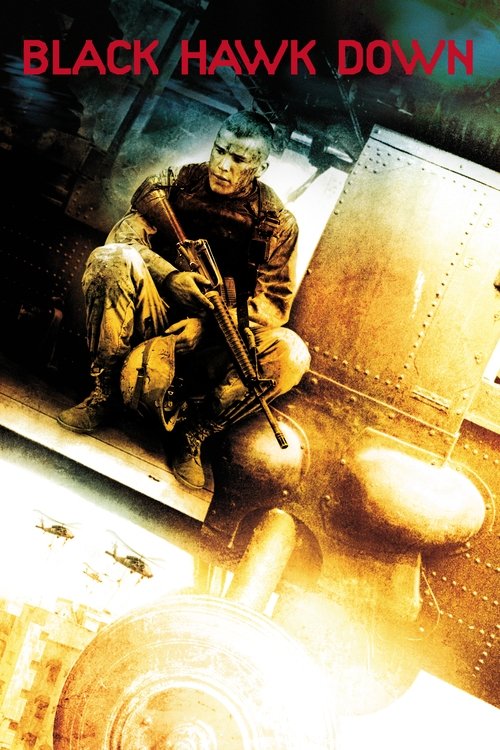
Black Hawk Down
Plot
When U.S. Rangers and an elite Delta Force team attempt to kidnap two underlings of a Somali warlord, their Black Hawk helicopters are shot down, and the Americans suffer heavy casualties, facing intense fighting from the militia on the ground.
Get the Weekly Woke Watchlist
New and trending movies scored for woke bias, preachy messaging, and forced political themes — before you waste your evening.
No spam. One useful email per week.
Overall Series Review
Categorical Breakdown
The movie judges characters entirely on military competence, courage, and loyalty to the unit, reflecting universal meritocracy. The American unit is multi-ethnic, and the narrative stresses their cohesion as a team, not their individual immutable characteristics. A key criticism of the film is its simplified, one-dimensional portrayal of the Somali militia as an overwhelming, faceless threat, which is a flaw in political nuance but does not constitute the application of an intersectional lens.
The narrative displays profound gratitude and respect for American soldiers and their sacrifices. The entire plot centers on the principle of 'leaving no man behind,' which upholds a transcendent moral law rooted in loyalty and institutional value. The institutions (the US military, the nation) are viewed as essential and fundamentally moral shields against the chaos and violence of the outside world, which is the direct opposite of civilizational self-hatred.
The cast is overwhelmingly male, authentically depicting all-male Special Operations units and a combat scenario. There are no primary or secondary female characters in combat roles, which completely avoids the 'Girl Boss' or 'Mary Sue' trope. The core theme is male brotherhood, self-sacrifice, and protective masculinity, with no presence of anti-natalist or anti-family messaging.
The theme of sexual identity is entirely absent. The focus is purely on the intense, real-world dynamics of an all-male combat unit, where the structure is strictly normative and focused on military camaraderie. There is no deconstruction of the nuclear family or introduction of gender ideology.
The film avoids overt religious discussion, but it is built upon a foundation of objective moral values such as honor, self-sacrifice, and transcendent brotherhood, which function as a higher moral law. The soldiers are depicted as men with a strong internal moral code, and traditional religion is not vilified or connected to bigotry. The core message aligns with the idea of a transcendent moral obligation to one's fellow man.
Get the Weekly Woke Watchlist
New and trending movies scored for woke bias, preachy messaging, and forced political themes — before you waste your evening.
No spam. One useful email per week.