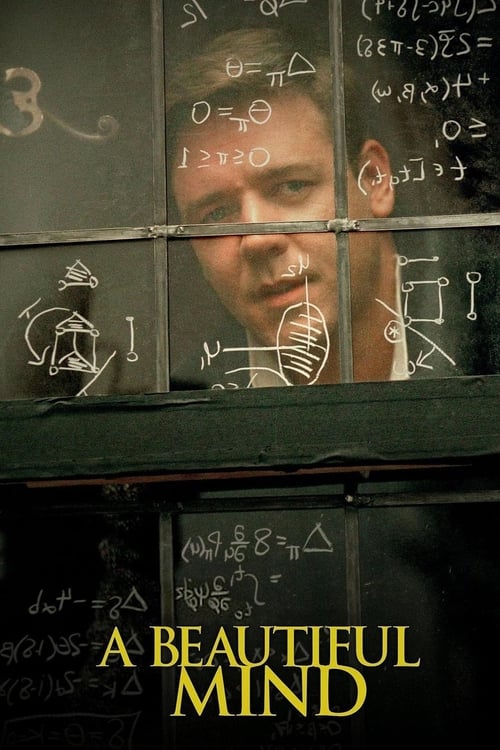
A Beautiful Mind
Plot
From the heights of notoriety to the depths of depravity, John Forbes Nash Jr. experiences it all. As a brilliant but socially awkward mathematician, he made a groundbreaking discovery early in his career and stands on the brink of international acclaim. But as the handsome and arrogant Nash accepts secret work in cryptography, he becomes entangled in a mysterious conspiracy. His life takes a nightmarish turn and he soon finds himself on a painful and harrowing journey of self-discovery.
Get the Weekly Woke Watchlist
New and trending movies scored for woke bias, preachy messaging, and forced political themes — before you waste your evening.
No spam. One useful email per week.
Overall Series Review
Categorical Breakdown
The movie is a biopic focused entirely on the struggle and achievement of an individual, John Nash, based on his merit as a mathematician. Character judgment and narrative focus are based on mental health, intellect, and personal ethics, not on immutable characteristics or intersectional hierarchy. The casting and setting are historically authentic to the mid-20th century, elite American academic institutions.
The plot contains a subplot where Nash works for the Department of Defense, tasked with cracking Soviet codes during the Cold War. This portrays American institutions and national defense as forces for order against a clear external adversary. Princeton, MIT, and American scientific achievement are treated with respect, framing institutions as essential backdrops for intellectual pursuit and stability.
The female lead, Alicia, is portrayed as a brilliant woman whose ultimate strength and heroism come from her unconditional love and protective fidelity to her husband through his severe mental illness. Her devotion models a complementary gender role, where her stability and support are the anchors that save the brilliant but broken male protagonist. Motherhood and long-term marital commitment are deeply celebrated as vital and restorative forces.
The story centers exclusively on the normative male-female pairing and the nuclear family unit as the structure that enables the protagonist's recovery. All major relationships and the central romance are heterosexual. The movie's narrative does not center on, advocate for, or deconstruct alternative sexualities or gender ideology.
The core of the story revolves around the spiritual and moral themes of sacrificial love, objective reality versus delusion, and the moral commitment of fidelity. Love and commitment are presented as transcendent moral principles that ultimately heal and redeem the protagonist's purely intellectual-driven life. There is no hostility toward religion, and the virtues celebrated suggest a higher moral law.
Get the Weekly Woke Watchlist
New and trending movies scored for woke bias, preachy messaging, and forced political themes — before you waste your evening.
No spam. One useful email per week.