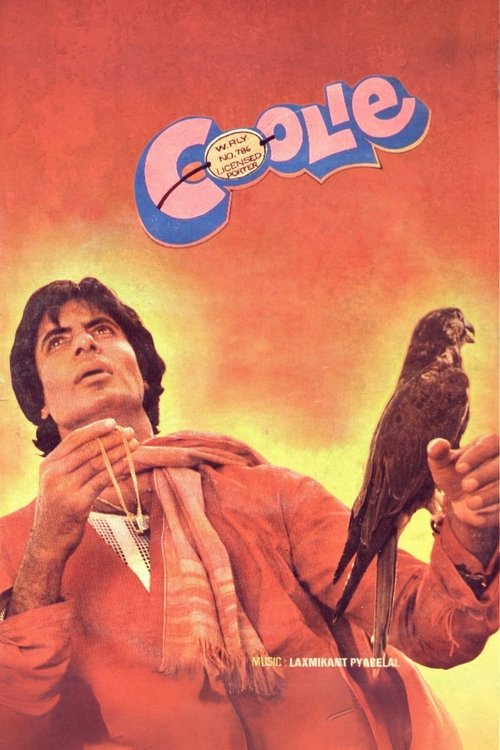
Coolie
Plot
Madhu is a police officer who always strives to protect Kunjali, a porter, from getting into trouble. However, Kunjali throws caution to the wind and fights for the rights of the workers.
Get the Weekly Woke Watchlist
New and trending movies scored for woke bias, preachy messaging, and forced political themes — before you waste your evening.
No spam. One useful email per week.
Overall Series Review
Categorical Breakdown
The central conflict is purely class-based, pitting a poor railway worker against a corrupt, wealthy villain. The hero's rise to leadership is due to his courage and integrity, representing universal meritocracy. The narrative explicitly stresses egalitarianism as the illiterate coolie hero marries a spoiled rich girl. Identity characteristics like race are irrelevant, as the film is set within the social context of India with a diverse, non-Western cast, and does not engage in vilification of 'whiteness.'
The film is an Indian production and does not engage with Western civilization or its history. The drama focuses on internal social issues, specifically fighting corruption and class injustice within the nation's system. There is no hostility toward the home culture; rather, the hero fights for the dignity of the common people and the integrity of the family and community, reinforcing core traditional values.
Gender dynamics follow a traditional complementarian structure where the male protagonist (Iqbal) is a protective, heroic figure. The core motivation for the hero's struggle is the reunion and protection of his mother, celebrating motherhood and the importance of the family unit. The female romantic lead is a partner in a class-bridging romance, not a 'Girl Boss' figure, and masculinity is depicted as vital and protective.
The film is a product of 1983 Indian cinema. The primary romantic relationship is a traditional male-female pairing, and the central family structure is the nuclear family, which the hero fights to restore. There is no presence of alternative sexual ideologies, deconstruction of gender, or centering of LGBTQ+ themes.
The film has a clear, transcendent moral structure based on good versus evil, where the hero is righteous and the villain is a greedy, immoral character. Faith is a visible, natural part of the cultural tapestry, with references to religious elements like a Haj pilgrimage, and is treated as a source of strength and community, not as a source of evil or bigotry.
Get the Weekly Woke Watchlist
New and trending movies scored for woke bias, preachy messaging, and forced political themes — before you waste your evening.
No spam. One useful email per week.