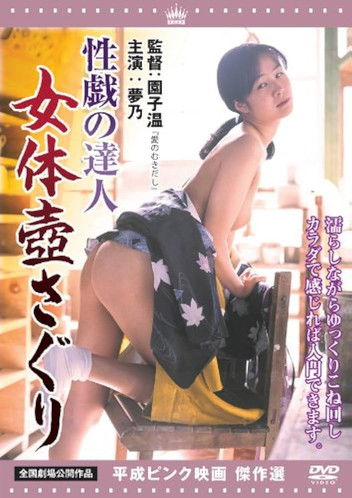
Teachers of Sexual Play: Modelling Vessels with the Female Body
Plot
About a pottery workshop run by Ms. Namie. Her students want to become as skilled as her, and she teach them that the key to good pottery is love.
Get the Weekly Woke Watchlist
New and trending movies scored for woke bias, preachy messaging, and forced political themes — before you waste your evening.
No spam. One useful email per week.
Overall Series Review
Categorical Breakdown
The story is set within a single Japanese workshop with exclusively Japanese characters. There is no element of intersectional hierarchy, discussion of immutable characteristics, or vilification of any race. The narrative is solely focused on the art of pottery and the instructor's bizarre teaching methods, completely bypassing any themes of systemic oppression or diversity politics.
The film’s setting and scope are strictly limited to an eccentric Japanese pottery class. The narrative does not contain any critique of Western civilization, a sense of civilizational self-hatred, or any commentary on Japan’s own culture or ancestors. The focus remains on the specific, insular world of the workshop.
Ms. Namie is the central teacher and a 'master' of her craft, a form of female dominance. However, the core of the film involves the sexual objectification of female bodies, which are used as tools to model the pottery, making the depiction antithetical to modern 'Girl Boss' tropes. The focus on raw sensuality and reproduction/sexuality as the 'key to art' also goes against modern anti-natalist messaging. The low score reflects that while objectifying, the narrative does not promote the 'Mary Sue' or anti-family tropes.
The sexual dynamics depicted are entirely heterosexual, focusing on a couple teaching students. The film is a softcore work focused on traditional male-female pairings. There is no presence of queer theory, gender identity discussions, or any attempt to deconstruct the nuclear family structure.
The movie operates in a secular space, where the concept of 'love' (in a purely physical/sexual sense) is presented as the subjective key to artistic creation. There is no reference to or critique of traditional religion, specifically Christianity. The film entirely avoids discussions of objective truth or a higher moral law, but it also does not actively frame religion as the root of evil.
Get the Weekly Woke Watchlist
New and trending movies scored for woke bias, preachy messaging, and forced political themes — before you waste your evening.
No spam. One useful email per week.