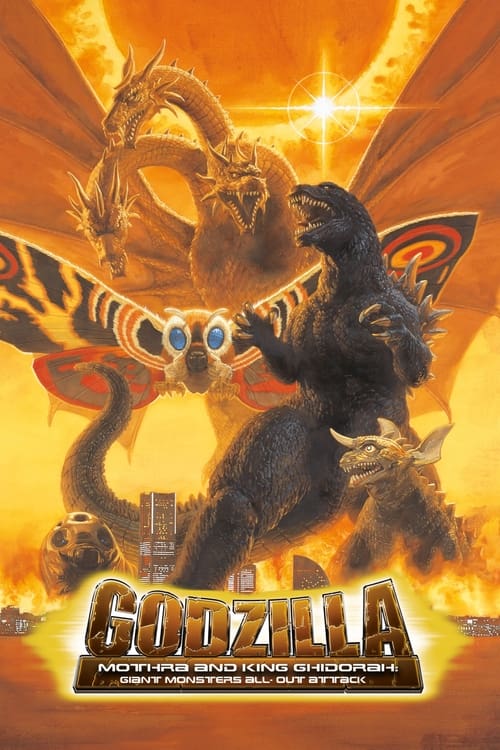
Godzilla, Mothra and King Ghidorah: Giant Monsters All-Out Attack
Plot
Godzilla has become a distant memory for Japan when the destruction of a US submarine raises alarms for Admiral Tachibana. His estranged daughter Yuri investigates the legend of the guardian monsters, who must rise to protect Japan against the vengeful spirits within Godzilla that seek to destroy both the nation and its people for the suffering they inflicted in the Pacific conflict.
Get the Weekly Woke Watchlist
New and trending movies scored for woke bias, preachy messaging, and forced political themes — before you waste your evening.
No spam. One useful email per week.
Overall Series Review
Categorical Breakdown
The narrative does not operate on intersectional race/class hierarchy but focuses on a national, historical conflict within Japanese society. All key human characters are Japanese. Character roles and status are determined by professional merit and duty, such as Admiral Tachibana's command and Yuri's journalistic tenacity.
The plot is built on a massive theme of national self-hatred. Godzilla is explicitly the vengeful spirit of victims killed by the Imperial Japanese Army during the Pacific War, targeting Japan itself because the nation wishes to forget its own past atrocities. The 'home culture' is framed as fundamentally culpable for historical crimes, and the destruction is divine punishment for civilizational amnesia.
The protagonist, Yuri Tachibana, is a strong, relentless female reporter who drives the investigation. She even expresses frustration about gender-based professional restrictions in her career, leaning slightly into the 'Girl Boss' trope. However, her father, Admiral Tachibana, is an equally capable and heroic figure who performs the final, ultimate sacrificial action to defeat the monster. The dynamic maintains a balance of competence between the genders without emasculating the male lead.
The movie contains no evident themes relating to sexual or gender ideology. The human relationships are based on professional and familial bonds, such as the relationship between a father and his daughter. The overall structure is normative.
The film is heavily invested in mystical and transcendent morality. The benevolent monster forces, Mothra, King Ghidorah, and Baragon, are explicitly called 'sacred guardian monsters' awakened by an ancient legend to protect the nation. The moral framework is established by a spiritual law—the need to atone for past moral failures—making faith and tradition a source of vital strength, not villainy.
Get the Weekly Woke Watchlist
New and trending movies scored for woke bias, preachy messaging, and forced political themes — before you waste your evening.
No spam. One useful email per week.