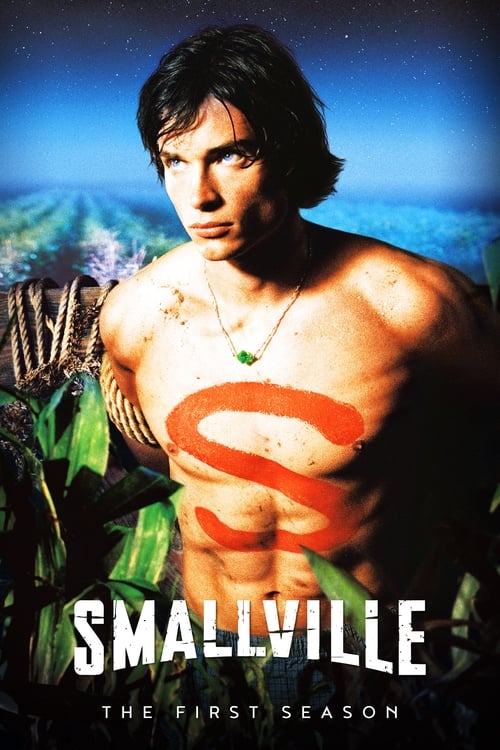
Smallville
Season 1 Analysis
Season Overview
Between the boy Clark Kent thought he was and the man he is destined to become lie the compelling stories of Smallville, the popular action series that reimagines the Superman saga from its roots.
Season Review
Categorical Breakdown
The narrative universally judges characters based on individual merit and moral choices. Clark's primary struggle is the moral choice to hide his alien identity and use his powers for good, a theme based on character, not race or intersectional hierarchy. The cast is colorblind in a traditional, non-political sense, featuring white, Black, and mixed-race actors in prominent roles without the narrative highlighting or vilifying 'whiteness.'
The series strongly validates the institution of the family, with the Kent farm in Smallville serving as a moral sanctuary and a positive anchor for Clark. Jonathan and Martha Kent are portrayed as morally grounded heroes who represent the best of their community. The score is slightly above 1 because the main threat is an alien invasion (the meteor shower) which literally ruins the lives of the townsfolk, suggesting a critique of the 'home' environment as a source of tragedy, but this is a plot device, not a philosophical deconstruction of Western culture.
Martha Kent is the supportive, nurturing, and protective mother figure, embodying a traditional complementary role. Chloe Sullivan and Lana Lang are independent and strong-willed, but their characters are largely defined by their relationships with Clark and their personal vulnerabilities. There is no 'Mary Sue' trope; Clark is the central, super-powered male hero who saves everyone. Males like Jonathan Kent and Lex Luthor are not depicted as bumbling or universally toxic, though Lex's struggle against his evil father establishes a pattern of bad masculine influence.
The season contains zero overt centering of alternative sexualities or gender ideology. All romantic relationships and the core family unit (the Kents) adhere to a normative male-female structure. Clark’s struggle with his secret is a universal 'coming-of-age' trope, and any interpretation as a 'queer allegory' is purely subtextual fan theory and not present in the explicit text or thematic lecturing of the show.
Clark's moral imperative to save people is a form of transcendent morality inherited from the Kents. Faith is not a major plot point, but moral relativism is implicitly rejected, as Clark consistently adheres to an objective moral law of selfless heroism. The score is an intermediate 4 because while there is no explicit anti-theism, a spiritual vacuum is present as Kryptonian heritage (science fiction) replaces traditional religious sources of morality, making Clark's code one of innate goodness rather than a God-given one.